
Insights, Denmark
Denmark gives graduates three years with no strings, then one of Europe's toughest citizenship tests
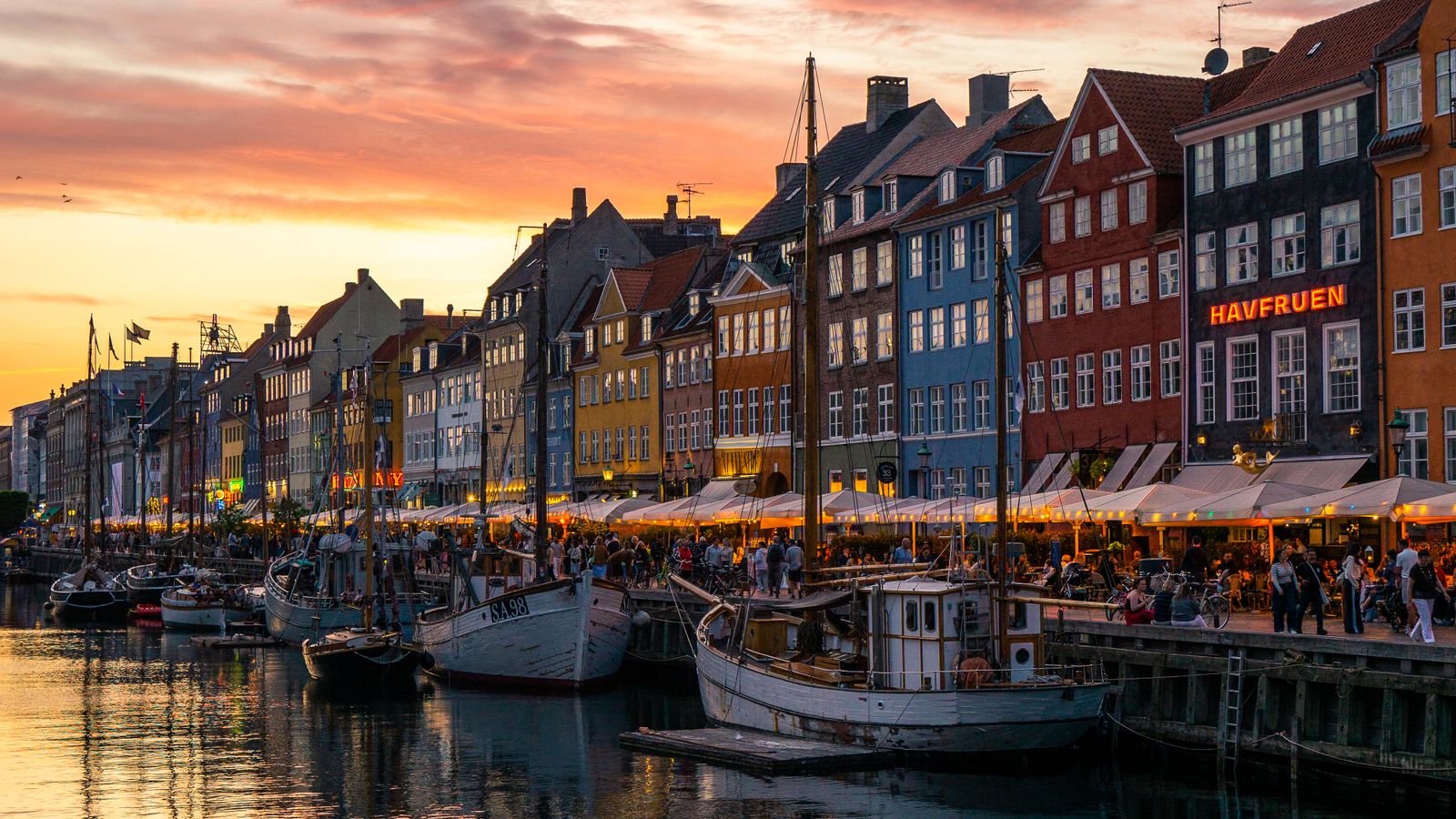
Most European countries hand graduates somewhere between six months and two years to find work before their status runs out. Denmark hands you three, no job offer required at any point, and it often shows up automatically alongside your student permit without you having to ask. It is the longest, least conditional runway of any country we've covered. What Denmark asks for on the other end, if you actually want to become Danish, is a different story entirely, and it's worth knowing both halves before you commit to either.
Three years, no job offer, no strings
Finish a Danish professional bachelor's, bachelor's, master's or PhD and you can apply for what's called an establishment card, valid for up to three years. The Danish Agency for International Recruitment and Integration, SIRI, often grants this job-seeking period automatically alongside your original study permit if your passport's validity allows for it, and where it isn't automatic, you apply before your student permit expires, through the same channel you used originally. You don't need a job offer to qualify, the card is issued on the strength of your Danish degree alone, and once you have it you can take any job, freelance, or start your own business. During the job-seeking window itself your work rights mirror what you had as a student, up to 90 hours a month, with full-time work allowed each June, July and August. Land a real job during that window and you convert to an unrestricted work or residence permit tied to the role.
What it costs while you build that runway
Non-EU tuition ranges from roughly DKK 45,000 to 120,000 a year, humanities and social science programmes sitting at the lower end, engineering, IT and natural sciences in the middle, and business degrees at the top. Living costs run DKK 6,000 to 10,000 a month depending on the city, Copenhagen at the higher end, Odense and Aalborg noticeably cheaper. You'll also need to show proof of funds, roughly DKK 7,426 a month held in your account, before your residence permit is approved, on top of whatever the university itself requires.
The establishment card only helps if your student permit and passport validity line up correctly before your studies end, and the paperwork for converting a job offer into a full work permit during the job-seeking window has its own deadlines. Tell us your programme and expected graduation date and we'll map the exact sequence so the three years you're entitled to actually start on time.
A scholarship that quietly cancels the fee altogether
Several Danish universities, including Copenhagen, Aarhus and Southern Denmark, run government-backed scholarships for non-EU/EEA master's applicants that most people applying don't realise exist until admission decisions come back. They're typically automatic, no separate application beyond your regular admission, and cover either a full or partial tuition waiver, with some faculties adding a monthly stipend toward living costs on top. Given that tuition alone can run past DKK 100,000 a year in some programmes, checking whether your target university and faculty participate before you assume the full sticker price is worth the ten minutes it takes.
The citizenship test almost nobody passes without studying hard
This is the part worth reading slowly. Standard naturalisation requires nine years of continuous residence, among the longest minimums in Europe, dropping to eight for recognised refugees and six to eight for spouses of Danish citizens who've held citizenship at least three years. On top of that you need Test i Dansk 3, a demanding language exam, and the 2021 citizenship test, a general-knowledge exam on Danish history, society and culture that has a reputation for a low pass rate even among people who've lived in Denmark for years. There's a financial bar too: two years of documented financial self-sufficiency, no more than four months of public benefits claimed across the last five years combined, no outstanding public debt, and no serious criminal record. Processing itself then takes roughly 19 to 21 months after that. The one genuinely good piece of news sitting inside all of this: Denmark has allowed dual citizenship since 2015, so none of this asks you to give up the passport you already hold.
Taken together, Denmark rewards a specific kind of applicant well. It rewards someone who wants real time to build a career or a business without a ticking clock forcing a rushed decision, since three unconditional years is more room than almost anywhere else in Europe. It rewards someone applying to a participating university where the government scholarship might cover most or all of the tuition, since that single check can change the entire cost of the degree. And it rewards someone who goes in with realistic expectations about citizenship, treating the nine years and the test as a real, well-defined project rather than a formality that happens on its own. It fits less well for anyone hoping residence alone will eventually convert into citizenship without deliberate preparation, because in Denmark, it won't.
Establishment card terms, tuition fees, scholarship availability and citizenship requirements are set by Danish authorities and reviewed periodically, so confirm the current rules for your programme and residence history, including the latest citizenship test pass criteria, before relying on any figure here.
Keep exploring
One door always opens another.
Pull the next thread. Each one ends somewhere useful, a clearer shortlist, a real number, a plan you can keep, whether or not you ever work with us.
See where you fit on the map
Slide your grades and budget and watch Europe light up with your real matches.
Open thisTake the two minute assessment
A few honest questions and you walk away with a personal blueprint, free.
Open thisStudy in Germany
Free public tuition and the strongest job market in Europe.
Open thisStudy in Italy
Income based tuition and some of the most generous aid on the continent.
Open thisStudy in France
World names, tiny public fees, a generous safety net.
Open thisRead the hard truths
The traps agents paid by commission will never warn you about.
Open thisAsk us on WhatsApp
One honest message. No script, no pressure, a real person who has walked it.
Open thisWe do this for you, properly, every time.
Don't navigate this alone. Take the free 2-minute path finder and get a personalised read on exactly where you stand.
This guide reflects Visagrad's own view and information gathered at the time of writing. Rules, fees, deadlines and timelines can change quickly, and some details may already have moved. Nothing here is official, legal or immigration advice. For accurate, up-to-date guidance built around your own situation, speak with us first.