
Insights, Czech Republic
The Czech Republic doesn't discount your tuition, it erases it, if you study in Czech
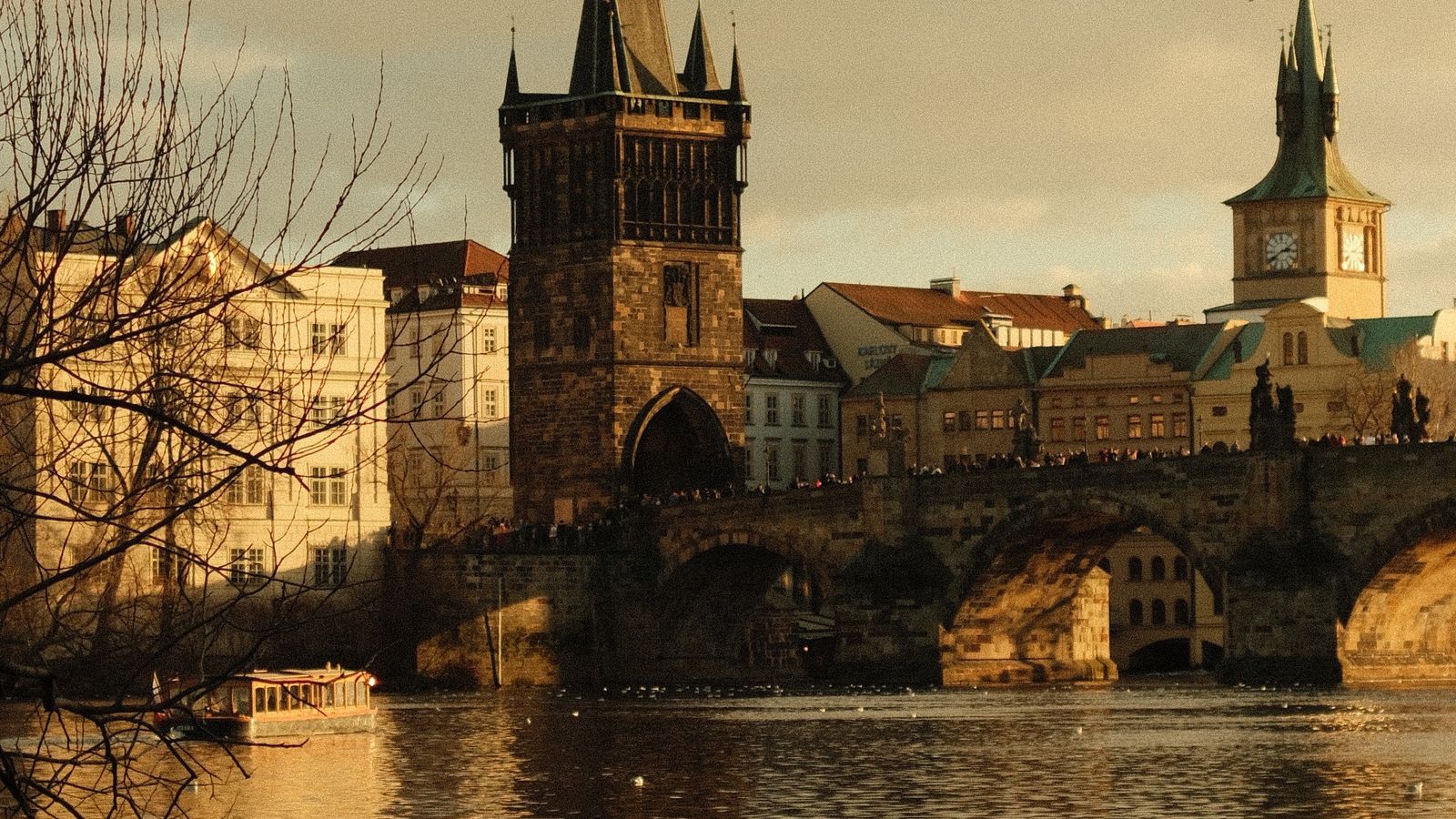
Most of the countries we cover give international students a discount. A regional scholarship, a reduced fee for public universities, a stipend tied to income. The Czech Republic does something different, and almost nobody outside the country seems to know it. At a Czech public university, a degree programme taught in Czech costs exactly the same for a student from Nigeria or India as it does for a student born in Brno: nothing. Not a waiver, not a grant you have to apply for and might lose, just zero on the invoice, because that is what the law charges everyone in that language. The condition attached to it is real, but it is not money, and it is not luck. It is one exam.
Free because the law says so, not because you qualified for something
Czech public higher education law sets tuition at zero for programmes delivered in the Czech language, and it does not carve out an exception for foreign nationals. Bachelor's, master's and doctoral degrees all qualify, at ordinary length of study plus a one-year grace period before fees for extra time kick in. There is no separate scholarship committee deciding whether you deserve it, no income threshold to prove, no essay explaining why you need it. If the programme is Czech-taught and you are formally admitted, you are charged the same as a Czech citizen, which is to say you are not charged. That single fact quietly makes the Czech Republic one of the least understood value plays in European higher education, because everyone assumes free public tuition in Europe is reserved for EU passport holders. Here, it is reserved for a language instead.
What actually gates the door
The condition is the Czech Language Certificate Exam, usually shortened to the CCE, and the level you need depends on where you are applying and what you are applying for. Many universities accept B1 for a bachelor's degree, but Charles University, the country's flagship and the highest-ranked university in Eastern Europe, asks for B2 at both bachelor's and master's level, a meaningfully higher bar. Getting there from nothing is not a side project you fit in over a summer. Most successful applicants go through a dedicated preparatory year first, run by institutes like Charles University's own ÚJOP, which exists specifically to take a foreign student with no Czech at all and get them to exam-ready in a year of intensive study, itself a paid programme but a fraction of what a full foreign degree costs anywhere else. Separately, publicly funded Czech courses at A1 through B1 are available to any foreigner living in the country, working or job-hunting, at no cost, which is a real head start if you can spend time in the country before you formally apply.
If you skip Czech, the price comes back
The moment you choose an English-taught programme instead, the free tier disappears and ordinary European tuition returns. Expect roughly CZK 100,000 to 400,000 a year, somewhere around €4,000 to €16,000, depending on the university and the field, with six-year English-taught medicine programmes at Charles University and Masaryk University in Brno sitting at the top of that range. That is still well under UK or US sticker prices, and it is a perfectly reasonable route if Czech genuinely is not realistic for you. It is just worth being honest with yourself about which door you are actually walking through, because a lot of applicants assume "study in the Czech Republic" automatically means the free version, and it only means that if the classroom language does too.
Whether the free Czech-taught route is realistic for you depends on your timeline, your starting language level and which university's exact CCE threshold you are up against, details that change the entire cost of your degree. Tell us where you are starting from and we will map out honestly whether the language route is worth the year it takes, or whether the paid English-taught path actually gets you there faster.
After graduation, the market opens on its own
Finish a full-time degree at a Czech university and you get free access to the labour market automatically, without a separate work permit, the moment your qualification is confirmed. If you have not lined up a job yet, you can convert your study permit into a long-term residence permit for employment-seeking or for starting a business, which functions as a roughly nine-month runway to find work or register a company before you need a firmer status. Once you do have an offer, an Employee Card covers most roles, while the EU Blue Card is reserved for genuinely skilled positions and carries a real income floor, which rose to CZK 73,823 a month, about €2,900, from May 2026. Prague and Brno both run serious hiring markets in IT, engineering and research, and a degree from Charles University, currently ranked 265th worldwide by QS and the top university anywhere in Eastern Europe, opens doors well beyond the country's own borders.
The honest part: ten years, not five
Here is the trade Czech immigration law makes you accept. Naturalisation ordinarily requires ten years of residence, several of them on a temporary permit before you qualify for permanent residence, and only then does the clock toward citizenship itself really start counting down in a way you can plan around. There is a genuine silver lining buried in that rule: years spent in the country on a student residence permit do count toward the total, so a long Czech degree is not dead time the way a study visa is in some other countries. But ten years is still ten years, well beyond the five-year EU-citizen fast lane and longer than the eight-year rules several Nordic countries have recently adopted. You will also need B1 Czech, a civics and society test, a clean record and proof you can support yourself without state help, all assessed at the point you actually apply. Spouses of Czech citizens get it cut to seven years, which is the only meaningful shortcut on offer.
Put together, this is a strong option for a fairly specific kind of applicant. It rewards someone with roughly a year of runway before they need to start a degree, enough to go through a Czech preparatory programme and clear the CCE, because that year buys a genuinely tuition-free degree at a respected European university rather than a discounted one. It rewards someone aiming at Prague or Brno's tech, engineering or research scene, where a Czech qualification carries real weight with employers well past the country's own market. And it rewards someone thinking in a decade rather than a five-year sprint, since the payoff, citizenship included, is real but slow. It fits less well for anyone who needs to start next semester with no Czech at all and no time to build it, and for anyone whose whole plan was a fast European passport. For the first group, the English-taught path still works, just at ordinary European prices. For the second, the Czech Republic is an honest, well-built country to live and work in. It was just never designed to be a shortcut.
Tuition rules, CCE level requirements and residence-permit thresholds are set and periodically revised by individual Czech universities, the Ministry of the Interior and the Ministry of Industry and Trade, so confirm the current figures for your specific university and application year before relying on them.
Keep exploring
One door always opens another.
Pull the next thread. Each one ends somewhere useful, a clearer shortlist, a real number, a plan you can keep, whether or not you ever work with us.
See where you fit on the map
Slide your grades and budget and watch Europe light up with your real matches.
Open thisTake the two minute assessment
A few honest questions and you walk away with a personal blueprint, free.
Open thisStudy in Germany
Free public tuition and the strongest job market in Europe.
Open thisStudy in Italy
Income based tuition and some of the most generous aid on the continent.
Open thisStudy in France
World names, tiny public fees, a generous safety net.
Open thisRead the hard truths
The traps agents paid by commission will never warn you about.
Open thisAsk us on WhatsApp
One honest message. No script, no pressure, a real person who has walked it.
Open thisWe do this for you, properly, every time.
Don't navigate this alone. Take the free 2-minute path finder and get a personalised read on exactly where you stand.
This guide reflects Visagrad's own view and information gathered at the time of writing. Rules, fees, deadlines and timelines can change quickly, and some details may already have moved. Nothing here is official, legal or immigration advice. For accurate, up-to-date guidance built around your own situation, speak with us first.