
Europe News, August 2026
Italy suspended Schengen with Spain this week
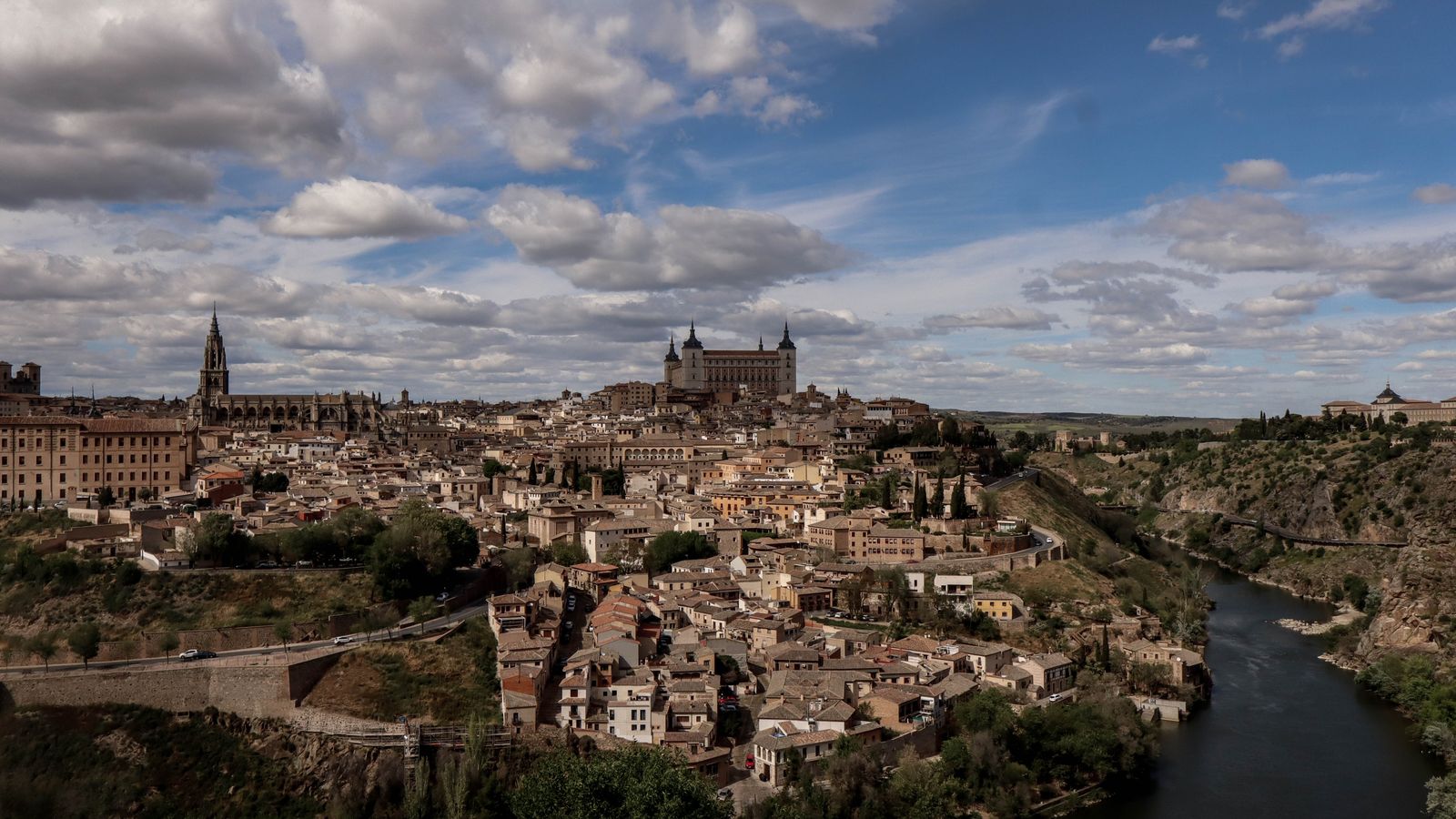
On 1 August 2026, Italy did something no Schengen country had yet done to another over the Ceuta migrant crisis. It suspended free movement, bilaterally, with Spain. If you hold an EU passport, you will not notice anything different flying or sailing between the two countries. If you do not, and you were planning to travel between Spain and Italy this month, you now need to show a passport at a checkpoint that did not exist a week ago.
What actually changed on 1 August
Italy has no land border with Spain, so this plays out entirely at airports and ferry ports. Italy's Interior Ministry, backed by Prime Minister Giorgia Meloni and Deputy Prime Ministers Antonio Tajani and Matteo Salvini, ordered targeted, selective checks on non-EU travelers arriving from Spain by air or sea. EU and Schengen citizens are explicitly exempt and can still cross on a national ID card. The legal basis is Article 25 of the Schengen Borders Code, the "urgent cases" provision that lets a member state reintroduce internal border checks immediately, without the normal advance-notice period, when it judges there is a serious threat to public policy or security. It is meant to be a last resort, proportionate and limited in time, and Italy's own Interior Minister, Matteo Piantedosi, has said the checks will stay in place for roughly a month, only for as long as necessary. That already puts a rough end date on it, in early September, and Italy is not starting from a clean slate here: roughly ten Schengen states, including Germany, Austria, Denmark, France, the Netherlands, Norway, Poland, Sweden and Slovenia, already had some form of reintroduced internal border control running before this, so Italy's move fits a pattern of Schengen countries leaning on this emergency provision more often, not a one-off.
Why Ceuta exploded this month
The trigger traces back to a ruling most people outside Spain never heard about. On 29 June 2026, Spain's Supreme Court found that migrants intercepted at sea while trying to reach Ceuta or Melilla, Spain's two North African enclaves, cannot be summarily returned to Morocco under the fast-track "hot return" procedure. That procedure, the court said, only applies to people caught breaching the physical land perimeter, the border fence itself, not to people intercepted by boat, where cameras and drones do not count as a physical barrier. Spain's Interior Ministry says smuggling networks read that ruling as an opening and pushed people toward sea crossings instead. On 30 July alone, Spanish authorities counted more than 49,000 people entering Ceuta from Morocco. By the following day, Spain's government said roughly 48,300 had already returned to Morocco voluntarily, leaving fewer than 2,000 still in the enclave, with a reported death toll of 57 among those who attempted the crossing. Ceuta itself already sits behind its own internal checkpoint separating it from mainland Spain, so none of this amounted to an uncontrolled entry into the wider Schengen area. It became a European story anyway, because Italy, Denmark and Finland decided to treat it as one.
What this means if you hold a Spain visa or residence permit
Nothing about your underlying right to travel has changed. A valid Spanish student visa, a TIE residence card or an ordinary Schengen visa still entitles you to move within the Schengen area, Italy included, under the same rules that applied on 31 July. What is different is that Italy is now actually checking, at its air and sea entry points from Spain, a document that used to go unchecked. If you are a non-EU student in Spain with a conference, an exchange placement or a visit to a partner university in Italy this month, expect an identity check, a longer queue and a real, if small, chance that a paperwork gap nobody previously looked for gets caught now that someone is looking. That is friction, not a ban, and it is worth saying plainly because a lot of the coverage this week has blurred that line.
A measure like this moves fast and gets extended, narrowed or dropped with little warning. If you have travel booked between Spain and Italy this month, or you are unsure whether your visa or TIE status is airtight enough to withstand an unexpected check, tell us your situation and we will confirm exactly what you need before you fly.
France tightened its own border, without suspending anything
France took a different path. Rather than invoking Article 25, French Interior Minister Laurent Nuñez ordered reinforced controls at the land border with Spain, more police and gendarmerie, drone surveillance, three aircraft and additional patrols on the cross-border trains, and President Emmanuel Macron offered Spain further support, including through Frontex. That is a step up in presence and checks, not a formal suspension of free movement, and it matters for a different group of travelers: anyone crossing the France-Spain land border by train, bus or car, a route plenty of workers and students actually use, rather than flying. France has also been explicit that it is not seeking Spain's removal from Schengen, which puts it at odds with the harder line coming from Rome, Copenhagen and Helsinki.
Denmark and Finland want Spain out of Schengen. That hasn't happened.
This is the part worth being precise about, because it is where a real story turns into an overstated one if you are not careful. Italy and Denmark, joined by Finland, have called for Spain to be suspended from the Schengen area entirely, arguing Madrid failed to control an external EU border. Danish Prime Minister Mette Frederiksen made the call directly. That is a political demand, not a legal step, and it has gone nowhere: France has said it sees no reason to exclude Spain, the European Commission has taken no such action, and Spain's own government has pushed back hard. Prime Minister Pedro Sánchez said solidarity and empathy are optional, but respect for European treaties and facts is not, and Spain's Foreign Minister José Manuel Albares summoned Italy's ambassador over the dispute. The EU commissioner overseeing the response has said practically all of the people who entered Ceuta have already left, and that not one person crossed onward into mainland EU territory. Spain has not been banned or suspended from Schengen, and nothing currently in force does that.
What to actually do if you're traveling this month
If your route runs through Spain and Italy, carry your passport alongside your visa or TIE, even for a trip you would previously have made with barely a document check, and build in extra time at the airport or ferry terminal in case of queues. If your route runs through the France-Spain land border, the same logic applies to trains and road crossings, where checks are heavier than they were a week ago even without a formal suspension. Beyond that, the right response is to watch, not panic. The measure that actually restricts anything, Italy's, is scoped to one month and one route. The measure that would genuinely change your position, removing Spain from Schengen altogether, remains a demand from two governments that a third has already rejected, with nothing behind it yet. Treat this month as a period of extra document friction on specific routes, confirm your own paperwork is current before you fly, and reassess in September when Italy's order is due to expire.
Frequently asked questions
Does Italy's Schengen suspension change my visa or residence permit?
No. A valid Spanish student visa, TIE residence card or Schengen visa still gives you the same legal right to travel within Schengen, Italy included, that it did before 1 August 2026. What changed is enforcement, not entitlement: Italy is now actually checking passports and documents at its air and sea entry points from Spain, where before there was no check at all for that route.
Do I need to apply for a new visa to fly from Spain to Italy now?
No new visa or authorization exists or is required. Bring the passport and visa or residence document you already hold, expect an identity check that did not happen a week earlier, and budget extra time at the airport or ferry terminal. This is a document check, not a new entry requirement.
Has Spain been suspended from the Schengen area?
No. As of 2 August 2026, only Italy has suspended its bilateral Schengen arrangement with Spain, for one month. Denmark and Finland have called for Spain to be suspended from the entire Schengen zone, but that is a political proposal, not a legal reality. France has explicitly said it will not pursue Spain's suspension, and the European Commission has taken no such step.
Are Erasmus and exchange students affected by the Italy-Spain border checks?
Not in any way that changes their travel. Erasmus and university exchange students moving between EU countries are overwhelmingly EU citizens, and Italy's measure explicitly exempts EU and Schengen nationals, who can still cross on a national ID card. The checks target non-EU, third-country nationals arriving from Spain by air or sea.
How long will Italy's border checks with Spain last?
Italy's Interior Ministry has said the measure runs for roughly one month from its 1 August 2026 start, with officials describing it as in force only for as long as necessary. Reintroduced Schengen border controls under the Schengen Borders Code's urgent-case provision are meant to be time-limited and are legally vulnerable if repeatedly extended on the same justification, so watch for whether Italy actually lets it lapse in early September or rolls it over.
This situation is moving quickly and details here reflect reporting as of 2 August 2026. Italy's suspension, France's border posture and the political debate over Spain's Schengen status can all change with little notice, so confirm the current status directly before relying on any of it for travel booked later in August or beyond.
Keep exploring
One door always opens another.
Pull the next thread. Each one ends somewhere useful, a clearer shortlist, a real number, a plan you can keep, whether or not you ever work with us.
See where you fit on the map
Slide your grades and budget and watch Europe light up with your real matches.
Open thisTake the two minute assessment
A few honest questions and you walk away with a personal blueprint, free.
Open thisStudy in Germany
Free public tuition and the strongest job market in Europe.
Open thisStudy in Italy
Income based tuition and some of the most generous aid on the continent.
Open thisStudy in France
World names, tiny public fees, a generous safety net.
Open thisRead the hard truths
The traps agents paid by commission will never warn you about.
Open thisAsk us on WhatsApp
One honest message. No script, no pressure, a real person who has walked it.
Open thisWe do this for you, properly, every time.
Don't navigate this alone. Take the free 2-minute path finder and get a personalised read on exactly where you stand.
This guide reflects Visagrad's own view and information gathered at the time of writing. Rules, fees, deadlines and timelines can change quickly, and some details may already have moved. Nothing here is official, legal or immigration advice. For accurate, up-to-date guidance built around your own situation, speak with us first.