
Study Abroad, Luxembourg
Luxembourg treats foreign students like its own and PhD candidates like employees, until citizenship asks for a language spoken nowhere else
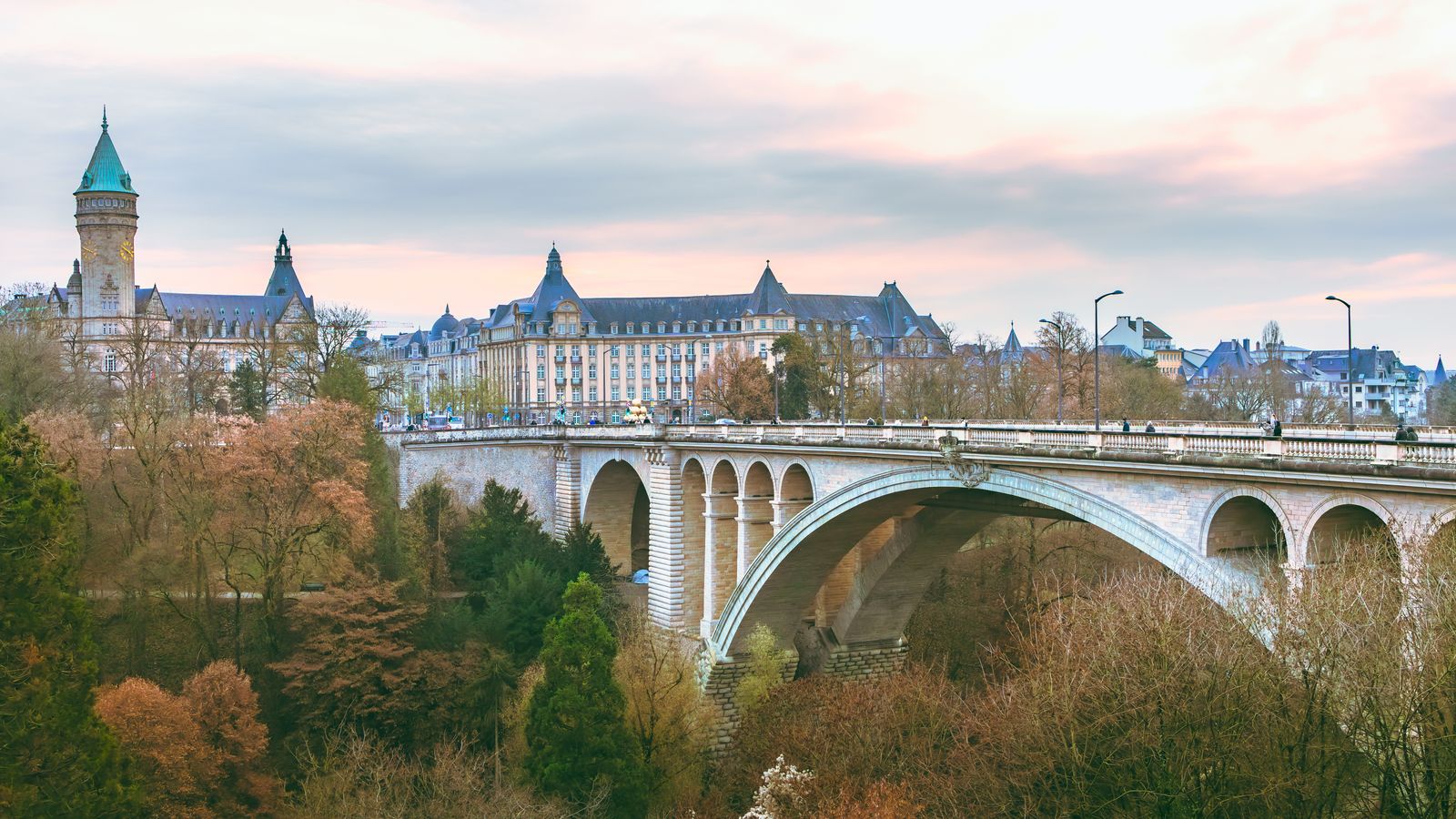
Ask someone comparing places to study in Europe about Luxembourg and you will usually get a shrug. It is the smallest country most applicants will ever seriously consider living in, squeezed between Belgium, France and Germany, and better known for banking and EU institutions than for its university. That reputation is doing readers a disservice. Luxembourg runs one of the more unusual funding setups on the continent. It will not charge you more for being foreign, it pays its doctoral candidates as employees rather than as scholarship holders, and close to half the people already living there arrived from somewhere else, so you would not be the only outsider in the room. The catch, and there is always one, only shows up once you decide you want to stay for good.
Does Luxembourg charge foreign students more?
In most of Europe, the first number a non-EU applicant has to check is how much higher their fee is than an EU citizen's. Luxembourg skips that question entirely. The University of Luxembourg, the country's only public university, charges the same schedule to everyone who enrols, roughly €400 a semester for the first two semesters of a bachelor's degree and €200 a semester after that, plus a one-off €100 application fee. There is no second, higher column for applicants holding a passport from outside the EU. Most master's programmes run somewhere between free and about €5,200 a year, with a small number of specialised degrees, logistics and supply chain management among them, priced closer to €24,000. That range depends entirely on the programme you pick, not on your nationality.
The country backing that policy is genuinely mixed. As of January 2026, Luxembourg counted just under 691,000 residents, and 322,050 of them, 46.6 percent, held a foreign nationality, spanning some 180 different countries. A little over three-quarters of those foreign residents are EU citizens, which still leaves close to 80,000 non-EU nationals living there day to day. Whatever you picture a small, closed European country to feel like for an outsider, Luxembourg is closer to the opposite of that picture.
The trilingual wall in front of a bachelor's degree
Here is the part the equal-fee headline leaves out. The University of Luxembourg is one of the few universities anywhere that teaches bachelor's degrees in two, three or even four languages at once, mixing French, German, English and sometimes Luxembourgish within the same programme. Admission is not a matter of proving you speak the main teaching language well. You have to show competence, at a specific level on the Common European Framework, in every language the programme lists, and programmes routinely list more than one. A typical bachelor's page might ask for English at C1, a second language, French or German, at B2, and a third at A2. Fall short on any one of the three and the fee schedule you qualified for stops mattering.
Master's degrees are a different, far more approachable calculation. Most are taught mainly in English, and the roster of fully English-taught master's programmes has been growing steadily, alongside others that pair English with French or English with German rather than demanding all three. If the trilingual bachelor's wall looks daunting, the honest read is that Luxembourg fits a postgraduate applicant far more comfortably than an undergraduate one.
The trilingual requirement on a bachelor's page and the funding category behind a PhD offer are exactly the kind of detail that decides whether an application is realistic, and neither shows up clearly until you are already deep into the programme listing. Send us the specific programme you are looking at, your current language levels and your degree level, and we will tell you honestly whether Luxembourg fits or whether your effort is better spent somewhere else.
Is a PhD in Luxembourg a job or a scholarship?
For a doctorate, the default answer is a job. The Luxembourg National Research Fund runs the AFR grant scheme, and the standard route funds a PhD candidate through an actual employment contract with the host institution, not a bursary paid into a student account. Based on the salary index in force from 1 June 2026, the fund contributes up to €54,574 a year toward the cost of employing that candidate, a figure that already bakes in employer charges, social security and pension contributions rather than sitting on top of them, plus a separate fixed training and mobility allowance of €6,000 and a one-off travel payment calculated from the distance between your home country and Luxembourg. A stipend without an employment contract does exist, but the fund treats it as the exception rather than the rule, reserved mainly for candidates who stay based at a partner institution abroad, and it pays a flat €1,500 to €2,100 a month instead.
The distinction matters beyond the payslip. An employment contract means payroll tax withheld at source, standard Luxembourg labour protections, and a residence status built around being hired rather than being enrolled. If a doctoral offer describes the funding as a grant, a scholarship or a stipend rather than a contract, that is worth clarifying with the host institution's HR office before you accept, because the two tracks are administered differently even when the research itself looks identical from the outside.
Work rights, and what happens after you graduate
While you are studying, a Luxembourg student residence permit allows up to 15 hours of paid work a week during term, rising to full-time during university holidays. That ceiling is lower than Germany's 20 hours or Spain's 30, and it is worth budgeting around rather than assuming away, since Luxembourg's cost of living, typically €1,000 to €1,500 a month once rent, food and transport are added up, does not leave much slack for a shortfall.
Graduation opens a genuinely useful door, with one condition attached. Anyone who completes a master's degree or successfully defends a PhD thesis in Luxembourg can apply, before their student permit expires, for a residence permit to look for a job or set up a business, valid for up to nine months. Land a position that matches your qualification inside that window and the next step is a standard salaried-worker residence permit. The condition is the degree level itself: this route is written for master's and doctoral graduates, so a bachelor's alone does not carry the same automatic bridge, and anyone planning to stop at undergraduate level should map their next permit before the student one runs out rather than assume this window applies to them too.
Five years to citizenship, and a language almost nobody outside Luxembourg speaks
Strip away the funding and work-rights detail and the residence math is short by European standards: five years of legal residence, with the final year unbroken, is enough to apply for naturalisation. That puts Luxembourg roughly level with Germany's standard route and well ahead of Portugal or Spain, both of which sit at ten years for most applicants. Dual and multiple nationality has been fully allowed since a law passed on 23 October 2008 took effect on 1 January 2009, so becoming Luxembourgish does not require handing back the passport you already carry.
The genuine catch sits inside the word naturalisation, not the number of years in front of it. Applicants sit the Sproochentest, a two-part Luxembourgish test set at A2 for writing and B1 for speaking, alongside a course or exam covering civic life in the Grand Duchy. Luxembourgish is a real, living national language, but it is spoken by a few hundred thousand people, almost all of them already inside this one country's borders, which means it arrives with none of the classroom exposure, media, or casual familiarity that French, German or Spanish already carry for most applicants before they ever book a flight. Anyone who has lived in Luxembourg more than 20 years is exempt from the formal test itself, though even that group still has to sit through a short spoken-language and listening introduction course. There is no shortcut around learning at least some Luxembourgish if citizenship is the actual goal, and no amount of fluency in French or German substitutes for it.
Who this actually fits
Put the pieces together and Luxembourg rewards a fairly specific kind of applicant. It suits a prospective PhD candidate who would otherwise spend months assembling funding from several sources, because here the funding usually arrives as a job offer with a contract attached rather than a patchwork of grants. It suits a master's applicant comfortable studying in English who wants a low, nationality-blind tuition bill in a country where being foreign is closer to the norm than the exception. It fits someone honest with themselves about the 15-hour work cap and the cost of living, and about the fact that the reward for staying long term is written in a language they have almost certainly never encountered before landing.
It fits far less well anyone set on a bachelor's degree who is not already comfortable in two or three of French, German and English, since that wall sits at the front door rather than somewhere further down the process. And it does not suit anyone who wants citizenship without learning any Luxembourgish at all, because unlike the tuition, that requirement genuinely does not bend for outsiders.
Frequently asked questions
Does Luxembourg charge international students more than EU students?
No. The University of Luxembourg applies the same fee schedule to every student regardless of nationality: roughly €400 per semester for the first two semesters of a bachelor's degree and €200 per semester after that, with most master's programmes falling between €0 and about €5,200 a year. A handful of specialised master's, such as the one in logistics and supply chain management, charge closer to €24,000 a year, but that is set by the programme, not by where you hold a passport.
How much does a PhD candidate actually earn in Luxembourg?
Most doctoral positions are funded through the Luxembourg National Research Fund's AFR grant as an employment contract, not a scholarship. Based on the salary index in force from 1 June 2026, the fund contributes up to €54,574 a year toward the cost of employing a PhD candidate, a figure that already includes employer charges, social security and pension contributions, on top of a fixed €6,000 training and mobility allowance and a one-off travel payment. A stipend without an employment contract exists, but only in exceptional cases for candidates based at a foreign partner institution, and pays €1,500 to €2,100 a month.
How many hours can international students work in Luxembourg, and can I stay after I graduate?
A student residence permit allows up to 15 hours of paid work a week during term and full-time work during holidays. After finishing a master's degree or defending a PhD thesis in Luxembourg, you can apply, before your student permit expires, for a residence permit to look for a job or start a business, valid for up to nine months. Find a position that matches your qualification within that window and you switch to a salaried-worker permit.
How long does it take to become a Luxembourgish citizen, and do I have to give up my other passport?
Five years of legal residence, with the final year unbroken, plus the Sproochentest, a two-part Luxembourgish test at A2 written and B1 spoken, and a course or exam on civic life in the Grand Duchy. Anyone who has lived in Luxembourg for more than 20 years is exempt from the formal test, though a short spoken-language introduction course is still required. Dual and multiple nationality has been fully permitted since the law of 23 October 2008 took effect on 1 January 2009, so becoming Luxembourgish does not require giving up the citizenship you already hold.
Do I need to speak French, German or Luxembourgish to study in Luxembourg?
It depends on the degree. Master's programmes at the University of Luxembourg are mostly taught in English, with a growing number entirely in English and others bilingual in English and French or English and German. Bachelor's programmes are a different story: many are deliberately bi-, tri- or even quadrilingual, and admission requires proven competence, at a specific CEFR level, in every teaching language listed on that programme's page, not just the main one.
Tuition figures, the AFR salary-index contribution and the population and nationality statistics reflect the most recently published figures as of September 2026. University fees are set programme by programme and the FNR salary index is revised periodically, so confirm the current numbers for your exact programme and intake before relying on them.
Keep exploring
One door always opens another.
Pull the next thread. Each one ends somewhere useful, a clearer shortlist, a real number, a plan you can keep, whether or not you ever work with us.
See where you fit on the map
Slide your grades and budget and watch Europe light up with your real matches.
Open thisTake the two minute assessment
A few honest questions and you walk away with a personal blueprint, free.
Open thisStudy in Germany
Free public tuition and the strongest job market in Europe.
Open thisStudy in Italy
Income based tuition and some of the most generous aid on the continent.
Open thisStudy in France
World names, tiny public fees, a generous safety net.
Open thisRead the hard truths
The traps agents paid by commission will never warn you about.
Open thisAsk us on WhatsApp
One honest message. No script, no pressure, a real person who has walked it.
Open thisWe do this for you, properly, every time.
Don't navigate this alone. Take the free 2-minute path finder and get a personalised read on exactly where you stand.
This guide reflects Visagrad's own view and information gathered at the time of writing. Rules, fees, deadlines and timelines can change quickly, and some details may already have moved. Nothing here is official, legal or immigration advice. For accurate, up-to-date guidance built around your own situation, speak with us first.