
Opportunity Spotlight, Spain
Spain's shortage occupation list has an electrician's slot open in every province
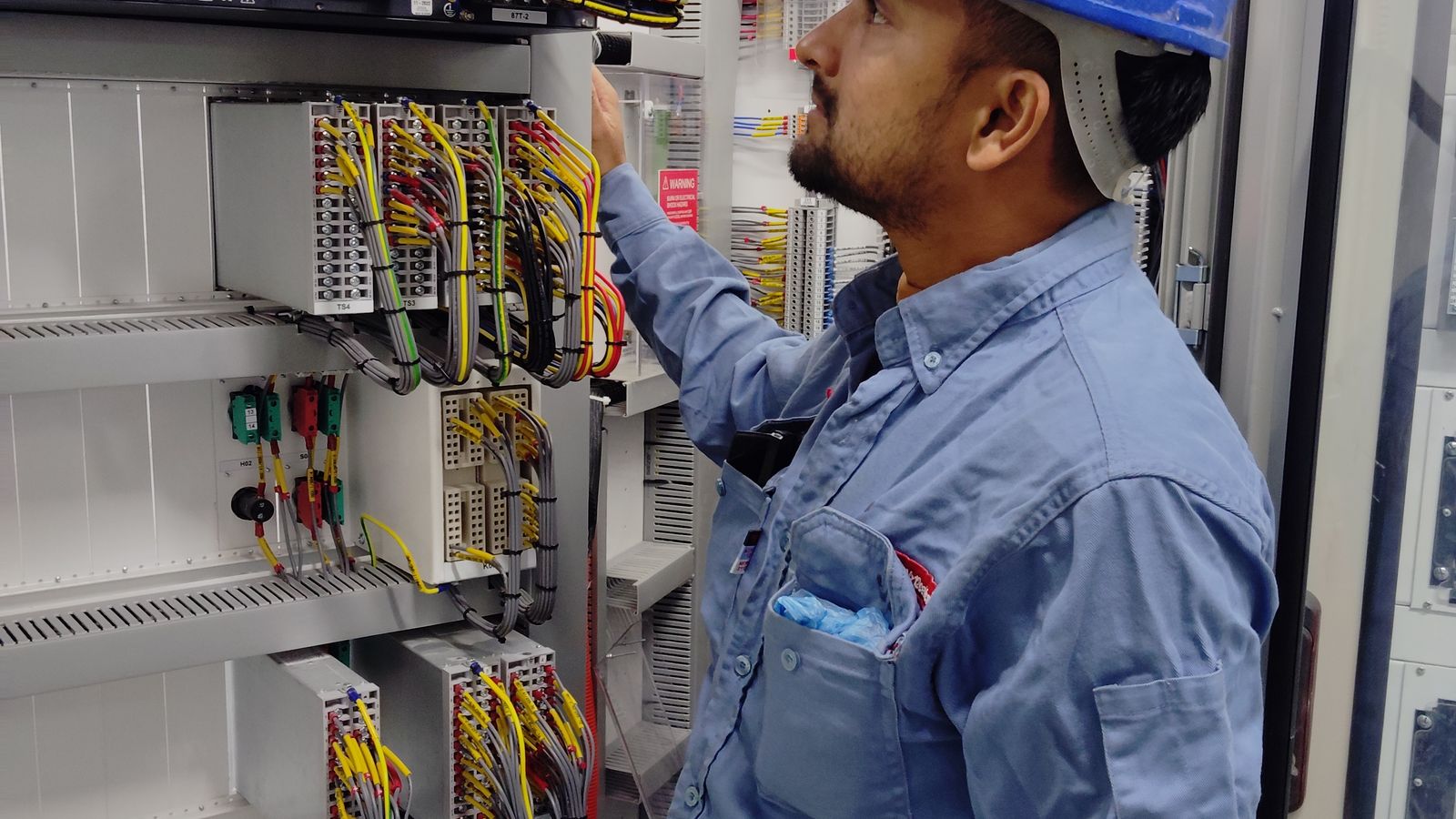
Four times a year, Spain publishes a list of jobs it cannot fill with the people already living there. Land a contract in one of those jobs and the hardest part of a Spanish work permit disappears before your file is even opened: your employer never has to prove that no Spaniard and no EU citizen wanted the role. Most people who hear about the list picture doctors, engineers, software teams. That picture is wrong. The list is mostly ships' crew, a few sports roles, and seven building trades. And one of those trades, electrical installer, sits on it with national scope, valid in every province in the country.
What the catálogo actually does to your application
Its name is the Catálogo de Ocupaciones de Difícil Cobertura, and it is published quarterly by Spain's state employment service. To understand why it matters you have to understand what it removes. Under normal rules, a Spanish employer who wants to sponsor a worker from outside the EU has to first put the vacancy through the public employment office and then obtain a certificate confirming that no suitable candidate was found among people already in the country. That certificate takes weeks, it is the employer's problem rather than yours, and it is where the great majority of sponsorship conversations end. A small installation firm with a job that needs filling this month will not wait out a labour market test for a candidate it has never met.
If your occupation appears on the catalogue for the province where the work will actually be done, that whole step vanishes. Article 65 of the immigration regulation, as reformed by Royal Decreto 1155/2024, treats the national employment situation as satisfied by the listing itself. The employer files for your residence and work authorisation without ever advertising the post. Nothing else about the process gets easier, but the one part that usually kills it is simply gone, and that changes what an employer is willing to consider.
The list is far shorter than people assume
The catalogue in force through 2026, published by resolution of 28 January 2026 and reissued unchanged in August, runs to around twenty-five occupations. Eighteen of them are merchant marine roles: naval refrigeration technicians, chief engineers, ship's engineers, coastal and naval mechanics, ships' pilots, radio-electronic officers, pursers, boatswains, deck sailors, plus ships' cooks, stewards, waiters and passenger-vessel auxiliaries. Professional athletes and sports coaches appear across all provinces and islands, subject to prior approval from the state sports secretariat, which is a genuinely open door for a very small number of people.
Everything else is trades, and that's the part almost nobody reads down to:
- , Carpinteros de aluminio, metálico y PVC, aluminium, metal and PVC carpenters.
- , Montadores de carpintería metálica, aluminio y PVC, the fitters who install that carpentry on site.
- , Instaladores electricistas de edificios y viviendas, electrical installers for buildings and homes.
- , Instaladores electricistas, en general, electrical installers across other settings.
- , Conductores-operadores de grúa en camión, grúa fija and grúa móvil, the three crane operator categories.
The two electrical entries between them cover most of what an ordinary working electrician does, and they carry national scope rather than being pinned to a handful of coastal provinces the way the maritime roles effectively are. There is no province in Spain where an employer hiring an electrical installer has to run the labour market test.
Why the electrician slot is genuinely open
This isn't a shortage that exists only on a spreadsheet. In May 2026, employers in Galicia went public with the complaint that they could not find qualified electricians even offering €2,000 a month and reasonable hours, which is the kind of statement a firm makes only after it has already tried everything else. The pressure is structural rather than seasonal. Spain is wiring solar onto a very large number of roofs, installing charging points for a vehicle fleet that is turning over, and renovating a housing stock that is old enough to need rewiring rather than patching. Demand for installers has been growing at roughly twelve percent a year on the back of that, while the trade keeps struggling to attract young Spaniards who were pushed toward university instead.
The money is honest rather than spectacular. An employed electrician in Spain generally earns €20,000 to €26,000 gross a year, which lands around €1,300 to €1,800 net a month spread over twelve payments, with industrial and specialist work at the top of that band and climbing with experience. Electricians working for themselves bill €25 to €50 an hour, and the ones who make €3,000 a month say plainly that it takes self-employment and long days to get there. That gap is worth understanding before you arrive, because your first permit is built around an employment contract, not around the rates you'll read about online.
The catalogue changes every quarter, and an occupation that's on it today can be off it in three months without warning. What matters is whether your trade, your documents and a real Spanish employer line up inside the window that's currently open. Tell us what you do and where your qualification comes from, and we'll tell you honestly whether the door is open for you right now or whether you'd be building a plan on a listing that's about to close.
What the catalogue does not do for you
It removes the labour market test. It does not find you a job, and it does not sponsor you. You still need a real Spanish company willing to file a residence and work authorisation in your name, with a signed contract at the wage its collective agreement sets for the role, and that company still has to be current on its social security and tax obligations and able to show it can actually pay you. The application is made by the employer, in Spain, before you travel. Everyone who reads about the catalogue and starts looking for a route that skips the employer has misunderstood what the list is: it is a concession to Spanish businesses that already want to hire, not an open invitation to workers abroad.
Which is why the practical order of operations runs backwards from what most people attempt. The employer comes first. The catalogue is the argument that makes a hesitant employer say yes, because it turns a process they think will take a year of paperwork into one they can plausibly complete. Walking into that conversation able to explain, precisely, that their labour market test requirement does not apply to your occupation is worth more than any amount of general enthusiasm about moving to Spain.
The habilitación question, and when it matters
Here is the part where honest advice separates from the recruitment pitch. Spain regulates who may certify electrical work under its low voltage regulation, the REBT. If you are employed inside a registered installation company, you work under that company's authorisation and its certifying installer signs the paperwork, which is how the overwhelming majority of employed electricians in Spain operate. Nothing about your foreign qualification blocks that.
The moment you want to sign your own certificates or run your own firm, the picture changes. You need a Spanish vocational qualification in electrotechnical installations at intermediate or higher level, a certificado de profesionalidad whose scope matches the regulation, or formal recognition of professional competence acquired through work experience under Royal Decreto 1224/2009, which exists precisely for tradespeople with years of practice and no local diploma. A foreign trade diploma has to be run through the non-university homologación route first, and if your qualification has no equivalent in the Spanish system, homologación simply isn't available. That is not a reason to stay home. It is a reason to plan for several years as an employee, and to start the competence recognition process from inside Spain rather than assuming your existing certificate travels.
This is a measurement, not a wish list
Spanish road transport is short of more than twenty thousand professional drivers by the government's own answer in parliament. The traffic authority exchanged over 15,500 foreign licences in a single year trying to relieve it. Transport firms report six to twelve months and costs reaching €20,000 to bring a single driver in from outside the EU. Truck driver is still not on the catalogue in 2026, and the sector has been saying so loudly for years without effect.
That tells you what the list really is. Inclusion follows the employment service's own vacancy and placement data by occupation and province, and an occupation stays on it only as long as that data supports it. The consequence cuts both ways. Nobody can argue an occupation onto the catalogue, which means the entries that are there are worth taking seriously. And nothing on it is permanent, which means the electrician entry that has held through 2026 is a window rather than a policy. The second-quarter catalogue was never published at all this year, and the third-quarter version turned up late in August, which is a useful reminder that the timing of these publications is not something you can build a personal schedule around.
What the permit is worth once you hold it
The first year is the constrained one, and it is worth being clear-eyed about that. You are attached to the employer who sponsored you, and leaving early is complicated in ways it won't be later. The renewal is where it opens up: four years, any employer, any activity, anywhere in the country, employed or self-employed, which is also the point where the habilitación route starts to make sense for anyone who wants to eventually work for themselves. The initial authorisation already permits self-employed activity alongside your main job during its validity, so the transition doesn't have to wait for renewal in every case.
Who this fits, and who it doesn't
This route was built for someone with real trade experience and a willingness to do the job that's actually short, in a country that will pay ordinary wages for it. If you have years behind you as an electrician, a metal or PVC carpentry fitter, or a certified crane operator, and you can work in Spanish well enough to be useful on a site from week one, then the single biggest obstacle to a Spanish work permit has already been lifted for you and you may not know it. That is a genuinely unusual position to be in.
It fits badly for anyone hoping the catalogue substitutes for a job offer, because it doesn't and never has. It fits badly for someone who wants to arrive and immediately trade under their own name, because the certification path runs through Spanish recognition and takes time. And it fits badly for a graduate with a degree in an unrelated field looking for any way into Spain, because an employer hiring an installer wants someone who can pull cable competently on Monday, and a catalogue listing does nothing to make an unqualified candidate hireable. The door is real, it is open, and it is narrow in exactly the way you would expect a door that useful to be.
Frequently asked questions
What is Spain's catálogo de ocupaciones de difícil cobertura and what does it do?
It's a list of occupations, published every quarter by Spain's state employment service, for which there aren't enough workers already available in the Spanish labour market. Its practical effect sits in article 65 of the immigration regulation, as reformed by Royal Decreto 1155/2024: if the job you've been offered is on the list for the province where the work happens, the national employment situation is treated as satisfied. Your employer doesn't have to advertise the vacancy through the public employment office first and doesn't have to obtain a certificate saying no local candidate was found. That single exemption removes the step where most sponsorships of non-EU workers quietly collapse.
Are electricians on Spain's shortage occupation list in 2026?
Yes. Both instaladores electricistas de edificios y viviendas, electrical installers for buildings and homes, and instaladores electricistas in general appear on the catalogue published for the first quarter of 2026 under the resolution of 28 January 2026, with national scope rather than being limited to particular provinces. The second-quarter catalogue was never published at all, and the third-quarter version arrived late, in August 2026, with no changes to either the occupations or their territorial coverage. So the electrician entries have been continuously in force through 2026 so far, but the list is revised quarterly and nothing on it is permanent.
Do I need my electrical qualification homologated to work as an electrician in Spain?
Not to be hired as an employee of a registered installation company, where you work under that company's own authorisation. You need Spanish recognition when you want to sign your own installation certificates or set up as an installer yourself, which requires a Spanish vocational qualification in electrotechnical installations, a matching certificado de profesionalidad, or formal recognition of professional competence acquired through work experience under Royal Decreto 1224/2009. A foreign trade diploma goes through the non-university homologación route, and where no Spanish equivalent exists, homologación isn't available at all. Plenty of people work for years as employed electricians in Spain without ever needing it, so the honest answer depends entirely on whether you want a payslip or your own signature on the paperwork.
How much does an employed electrician earn in Spain?
An electrician on a contract generally earns somewhere between €20,000 and €26,000 gross a year, which works out to roughly €1,300 to €1,800 net a month across twelve payments, with industrial and specialist work sitting at the upper end and rising with experience. Self-employed electricians bill considerably more per hour, commonly €25 to €50 depending on region and type of work, but they carry their own social security contributions, insurance, tools and dead time between jobs. Nobody arriving on a first work permit should plan around self-employed rates, because the initial authorisation is built around an employment contract.
Are truck drivers on Spain's shortage occupation list?
No, and this is the clearest proof the catalogue isn't a wish list. Spain is short of more than 20,000 professional drivers by the government's own parliamentary answer, licence exchanges for foreign drivers ran past 15,500 in a single year, and transport firms report six to twelve months and costs reaching €20,000 to bring one driver in from outside the EU. Truck driver still isn't on the catalogue in 2026. Inclusion follows the employment service's own vacancy data by occupation and province, not the loudest sector, which is exactly why an occupation that is on the list is worth taking seriously and why one that isn't can't be argued onto it.
Important notice: this article is for general educational purposes only. The Catálogo de Ocupaciones de Difícil Cobertura is revised quarterly and occupations are added and removed without notice, so an entry described here may not be in force by the time you read it. Salary figures reflect typical market ranges rather than any guarantee, and collective agreements set the binding minimum for each role and region. Qualification recognition outcomes depend entirely on your specific diploma and country of study. Confirm the current catalogue for the exact province where the job sits, and speak to a Visagrad expert before committing money or time to a plan built on any of it.
Keep exploring
One door always opens another.
Pull the next thread. Each one ends somewhere useful, a clearer shortlist, a real number, a plan you can keep, whether or not you ever work with us.
See where you fit on the map
Slide your grades and budget and watch Europe light up with your real matches.
Open thisTake the two minute assessment
A few honest questions and you walk away with a personal blueprint, free.
Open thisStudy in Germany
Free public tuition and the strongest job market in Europe.
Open thisStudy in Italy
Income based tuition and some of the most generous aid on the continent.
Open thisStudy in France
World names, tiny public fees, a generous safety net.
Open thisRead the hard truths
The traps agents paid by commission will never warn you about.
Open thisAsk us on WhatsApp
One honest message. No script, no pressure, a real person who has walked it.
Open thisWe do this for you, properly, every time.
Don't navigate this alone. Take the free 2-minute path finder and get a personalised read on exactly where you stand.
This guide reflects Visagrad's own view and information gathered at the time of writing. Rules, fees, deadlines and timelines can change quickly, and some details may already have moved. Nothing here is official, legal or immigration advice. For accurate, up-to-date guidance built around your own situation, speak with us first.