
Study Abroad, Spain
Spain's biggest scholarship for Latin Americans pays for everything and then sends you home
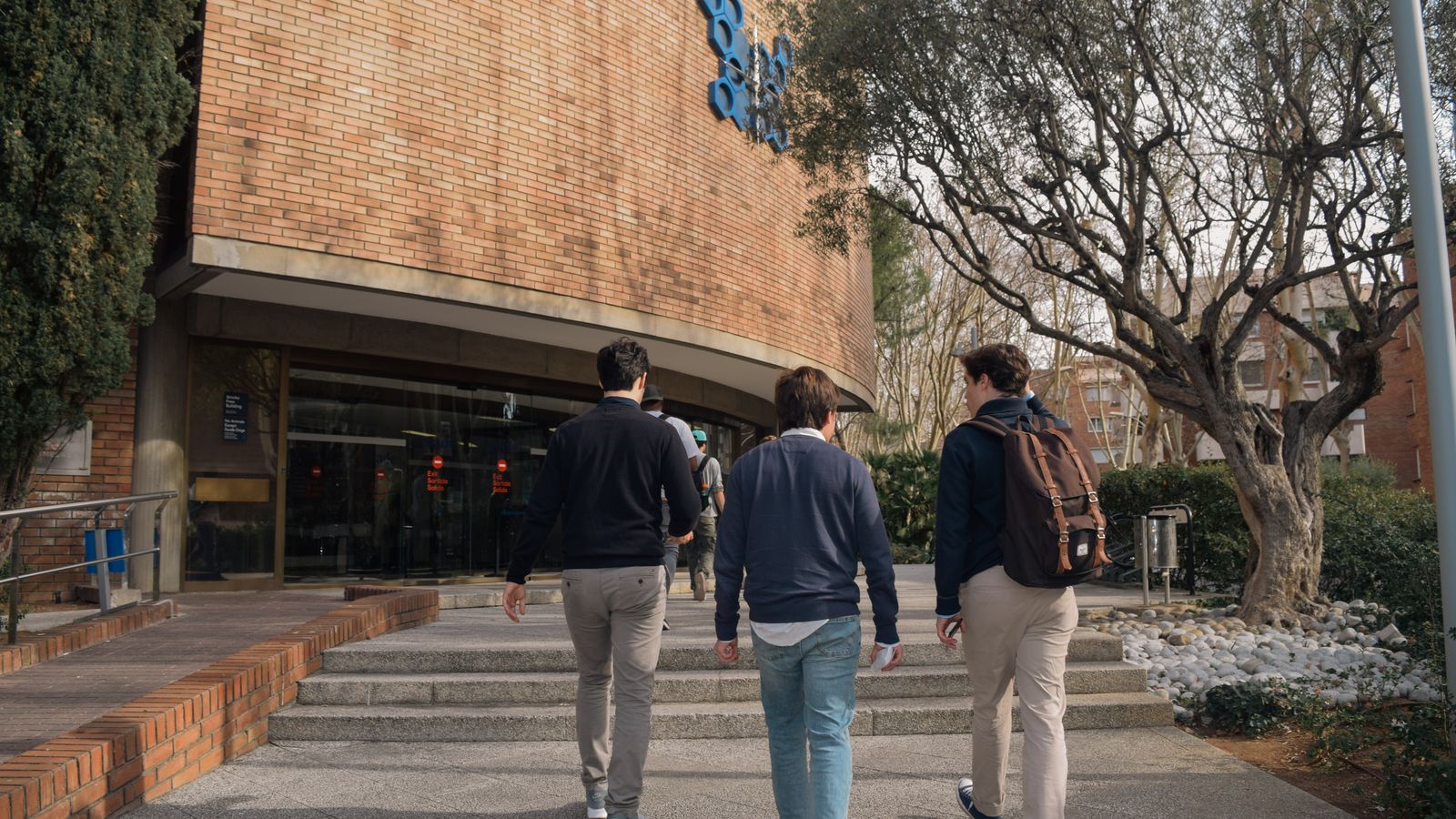
Every January, a scholarship call opens in Madrid that more people apply to than almost any other education programme in the Spanish-speaking world. For the 2026-2027 academic year it put 736 scholarships and grants on the table. By the time the postgraduate deadline passed on 2 March, 40,785 people had filed 112,673 applications for them, seven percent more than the year before. Colombia sends the most applicants, then Ecuador, Peru, Mexico and Argentina.
The Fundación Carolina scholarships are genuinely one of the best deals available to a Latin American graduate, and the coverage is real: fees, flight, insurance, somewhere to live. What almost nobody reads before hitting submit is a short paragraph near the bottom of the programme sheet, in the section headed conditions of the scholarship. That paragraph decides whether this offer fits the future you are actually planning, and for a large share of the people chasing it, it does not.
The largest scholarship programme between Spain and Latin America
Fundación Carolina was set up in 2000 and works as the main educational bridge between Spain and the Ibero-American Community of Nations. Its scholarships are aimed at graduates who are nationals of one of those countries, or Portugal, and who are living there when they apply. That residence requirement matters more than most people notice, and we come back to it later.
The 2026-2027 call was the 26th edition. Its 736 places break down into 228 postgraduate scholarships, 120 for doctorates and short postdoctoral stays, 114 doctoral renewals, 24 for teaching staff mobility, and 250 for institutional studies. Between them they cover 203 academic programmes at Spanish universities. So when someone tells you there are 736 scholarships for a master's in Spain, gently correct them. The master's number is 228, and that is the pool almost every reader of this article would be competing in.
The 2026 window closed in March, and that changes what you should be doing now
Be clear about the calendar, because a lot of pages online are still describing the 2026-2027 call as if it were open. It is not. Applications opened on 12 January 2026, the postgraduate deadline was 09:00 on 2 March 2026, and the doctoral, short stay and mobility rounds closed on 9 April. Admission decisions for the postgraduate round were communicated up to 31 July 2026. Nothing about that cycle is available to you today.
What that leaves is preparation time, which is the resource most applicants waste. The pattern is consistent: the previous call opened on 14 January 2025 and closed on 12 March, this one opened on 12 January 2026 and closed on 2 March, so mid-January to the first days of March is the shape of the window rather than a date anyone can promise you. That gives roughly four months from now to do the slow parts, and the slow parts are the ones that sink people. A degree certificate legalised through diplomatic channels or apostilled takes weeks in most countries and cannot be rushed in February. Neither can an equivalence of your grade average, which several programmes require. Neither can a letter of support from a recognised institution in your field, which the more specialised master's ask for by name.
You are not applying for money, you are applying for a seat
Here is the structural thing that catches people who are used to how scholarships work elsewhere. In most systems you find a university, get admitted, and then look for funding to pay for it. Carolina runs the other way round. The Foundation publishes a catalogue of specific programmes at specific universities, each with its own sheet, its own requirements and its own fixed number of places, and you apply to those programmes through the Foundation's own portal. You can name up to five postgraduate programmes in one candidacy and you rank them in order of preference.
That changes the strategy completely. The scarcity is not spread evenly across 228 places. It sits inside each individual programme, and some of those programmes offer two scholarships. Two. A candidacy that names five well-chosen programmes where your background genuinely matches what the sheet describes is a different proposition from one that names the five most famous universities on the list. The Foundation is selecting people to fill named seats, so the question a reviewer is answering is whether you are the right person for that specific master's, not whether you are impressive in general.
The part of this that decides your result is the shortlist, and it gets decided months before the portal opens. Which of the 203 programmes actually fit your degree, which ones have requirements you can still satisfy in time, and whether the return condition attached to them works with what you want your life to look like in five years, are all answerable now rather than in February. Send us your degree, your field and your real goal, and we will tell you honestly whether this route serves it or quietly works against it.
What one of these is actually worth
The money is not symbolic. Take a real programme from the 2026-2027 catalogue, the master's in advanced human rights studies at Universidad Carlos III de Madrid. It offered two scholarships. Each one covered the full open enrolment fee for the whole degree, 7,566.30 euros for all 90 ECTS credits, plus accommodation in a university residence on full board, a return economy flight from the scholarship holder's country, and non-pharmaceutical medical insurance for the stay.
Not every programme is built the same way. Many pay a monthly allowance for housing and living costs instead of putting you in a residence, and the amounts differ from one sheet to the next, which is why the Foundation keeps insisting that the economic conditions of each scholarship are the ones printed in that programme's own sheet. The doctoral programme for 2026, for comparison, pays 1,200 euros a month before tax plus four return flights a year. The honest summary is that a well-funded Carolina master's can leave you with close to no cost of study and no cost of living, which is rare anywhere in Europe.
The condition almost nobody reads before applying
Now the paragraph that this whole article exists for. In the conditions of the scholarship, the programme sheets we read for the 2026-2027 call describe an irrevocable commitment: when the scholarship ends, the holder returns to their own country or to any other country of the Ibero-American Community of Nations, with Spain explicitly excluded. The same section makes the scholarship exclusive, so it cannot be combined with any other grant, and states that failing to comply means the scholarship is interrupted and withdrawn immediately.
This is not a hidden trap, and the Foundation is not being dishonest about it. The whole institution exists to build capacity in Latin America, and it pays for the return flight precisely because going home is the point of the exercise. But it is written in a document most applicants skim after they have already fallen in love with the programme, and it is almost never mentioned by the people who repost the call every January for the clicks. So read it here first, while the decision is still cheap: this scholarship is designed to send you back, and the commitment to go is a condition of taking the money.
Where it collides with the two-year passport route
For Latin American readers the collision is specific and it is expensive, because the single strongest advantage you hold in Spain runs on a clock. Under Article 22 of the Spanish Civil Code, nationals of Ibero-American countries by origin can apply for Spanish citizenship after two years of legal residence rather than the ten years almost everyone else waits, and time spent in Spain on a student residence permit counts toward it. We wrote about that route in more detail here, and it remains the most valuable thing a Spanish degree can be attached to for someone from the region.
A scholarship whose conditions commit you to leaving Spain at the end of the course is pulling in the opposite direction. You would be funded through the exact years that were supposed to be building your residence, and then contractually pointed at the door in the month when staying starts to matter. There are two coherent answers to that and only two. Take the scholarship because the degree, the training and the network are what you actually want, and go home to use them, which is a good outcome and the one the programme was built for. Or fund the master's another way, keep your residence unbroken from the first day, and let the clock run. What does not work is taking the money while privately planning to stay, because the condition you signed is the one thing standing between you and the plan.
Who this genuinely fits
Strip the noise out and the fit is clear enough. This is for a graduate from an Ibero-American country or Portugal, still living there, whose career is going to be built at home or in the region, and who wants a Spanish master's without paying for it. For that person the scholarship is close to unbeatable, and the return condition is not a cost at all because it matches what they were going to do anyway. It also fits anyone in academia or public administration whose institution wants them trained and expects them back, which is the reasoning the doctoral track is openly built around.
It does not fit someone whose real goal is to stay in Spain, and it does not fit someone already living there, since the programme sheets ask you to be resident in your own country when you apply. It also does not fit anyone who needs certainty this year, because the window has closed and the next one is months away. And for the roughly 40,000 people who apply each cycle against a few hundred places, the honest advice is to treat Carolina as one line in a plan rather than the plan itself. Build the application properly, submit it in February, and have a route that does not depend on winning it.
The call will open again in January, the way it has for 26 years. The people who get in will mostly be the ones who decided in September which five programmes fit them and spent the autumn getting the documents legalised. That is the whole advantage, and it is available to you right now for free.
Frequently asked questions
Who can apply for a Fundación Carolina postgraduate scholarship?
Nationals of a country in the Ibero-American Community of Nations, or Portugal, who are also resident there at the time of applying. That second half is the part people miss. The programme sheets ask you to be a national of an Ibero-American country or Portugal and to be living there, so someone who has already moved to Spain on a student or work permit is outside the target group. Individual programmes add their own requirements on top, usually a legalised or apostilled degree certificate, sufficient Spanish, and sometimes a letter of support from a recognised institution in the field.
When does the next Fundación Carolina call open and close?
The 2026-2027 call opened on 12 January 2026 and the postgraduate deadline was 09:00 on 2 March 2026, so that window has already closed. Doctoral, short postdoctoral stay and academic mobility applications closed on 9 April 2026, and admission decisions for the postgraduate round were communicated up to 31 July 2026. The previous call opened on 14 January 2025 and closed on 12 March 2025, so mid-January to early March is the pattern to plan around for the next cycle rather than a date you can rely on.
How competitive is a Fundación Carolina scholarship?
The 2026-2027 postgraduate round closed with 40,785 applicants filing 112,673 applications, a 7.2 percent rise on the year before, against 736 scholarships and grants across every modality. In the previous call the Foundation put the average at 51.5 applicants per scholarship. Only 228 of the 736 are postgraduate places. Colombia, Ecuador, Peru, Mexico and Argentina send the most applicants.
What does a Carolina master's scholarship cover?
It varies programme by programme and the exact figures sit in each programme sheet. A representative example from the 2026-2027 catalogue is the master's in advanced human rights studies at Universidad Carlos III de Madrid, offering two scholarships that cover the full open enrolment fee of 7,566.30 euros for all 90 ECTS credits, accommodation in a university residence on full board, a return economy flight to Spain, and non-pharmaceutical medical insurance. Other programmes pay a monthly housing and living allowance instead of providing a residence place.
Do you have to return to your country after a Fundación Carolina scholarship?
The programme conditions we read for the 2026-2027 call state it as an irrevocable commitment: once the scholarship ends the holder returns to their own country or to any other country of the Ibero-American Community of Nations except Spain. The conditions also make the scholarship exclusive, so it cannot be combined with another grant, and say that failure to comply means the scholarship is interrupted and withdrawn. Conditions are set per programme, so read the sheet for the exact programme you are applying to rather than assuming.
Does a Carolina scholarship help with Spanish citizenship?
It works against that specific plan. Nationals of Ibero-American countries by origin can apply for Spanish citizenship after two years of legal residence, and time on a student permit counts toward that clock. A scholarship whose conditions commit you to leaving Spain when the course ends interrupts the residence you would need to keep building. If the passport is the real objective, fund the master's another way and keep the residence continuous. If the degree and the network are the objective, the scholarship is one of the strongest offers available.
- , Start the legalisation or apostille of your degree certificate now, because it takes weeks and cannot be done in the final fortnight before the deadline.
- , Read the conditions of the scholarship section on each programme sheet before you shortlist, not after you are admitted.
- , Pick your five programmes on the basis of fit with the sheet, since the real competition sits inside a programme that may offer only two places.
- , Check whether the programme requires an equivalence of your grade average or a letter of institutional support, and start whichever applies immediately.
- , Decide before you apply whether you intend to stay in Spain afterwards, because the return commitment and the two-year residence clock cannot both be honoured.
Important notice: this article is for general educational purposes only. Scholarship numbers, coverage, eligibility, deadlines and the conditions attached to each programme are set in the official call and in each programme's own sheet, they change from one cycle to the next, and they must be confirmed for the exact programme and call year you are applying to. Nothing here is a promise of a scholarship, an admission or a visa, and nationality and residence rules turn on your individual circumstances. Speak to a Visagrad expert about your own case before making plans.
Keep exploring
One door always opens another.
Pull the next thread. Each one ends somewhere useful, a clearer shortlist, a real number, a plan you can keep, whether or not you ever work with us.
See where you fit on the map
Slide your grades and budget and watch Europe light up with your real matches.
Open thisTake the two minute assessment
A few honest questions and you walk away with a personal blueprint, free.
Open thisStudy in Germany
Free public tuition and the strongest job market in Europe.
Open thisStudy in Italy
Income based tuition and some of the most generous aid on the continent.
Open thisStudy in France
World names, tiny public fees, a generous safety net.
Open thisRead the hard truths
The traps agents paid by commission will never warn you about.
Open thisAsk us on WhatsApp
One honest message. No script, no pressure, a real person who has walked it.
Open thisWe do this for you, properly, every time.
Don't navigate this alone. Take the free 2-minute path finder and get a personalised read on exactly where you stand.
This guide reflects Visagrad's own view and information gathered at the time of writing. Rules, fees, deadlines and timelines can change quickly, and some details may already have moved. Nothing here is official, legal or immigration advice. For accurate, up-to-date guidance built around your own situation, speak with us first.