
Opportunity Spotlight, Spain
Spain brings in more than 25,000 seasonal farm workers a year, and the channel that picks them is one no agent can sell you
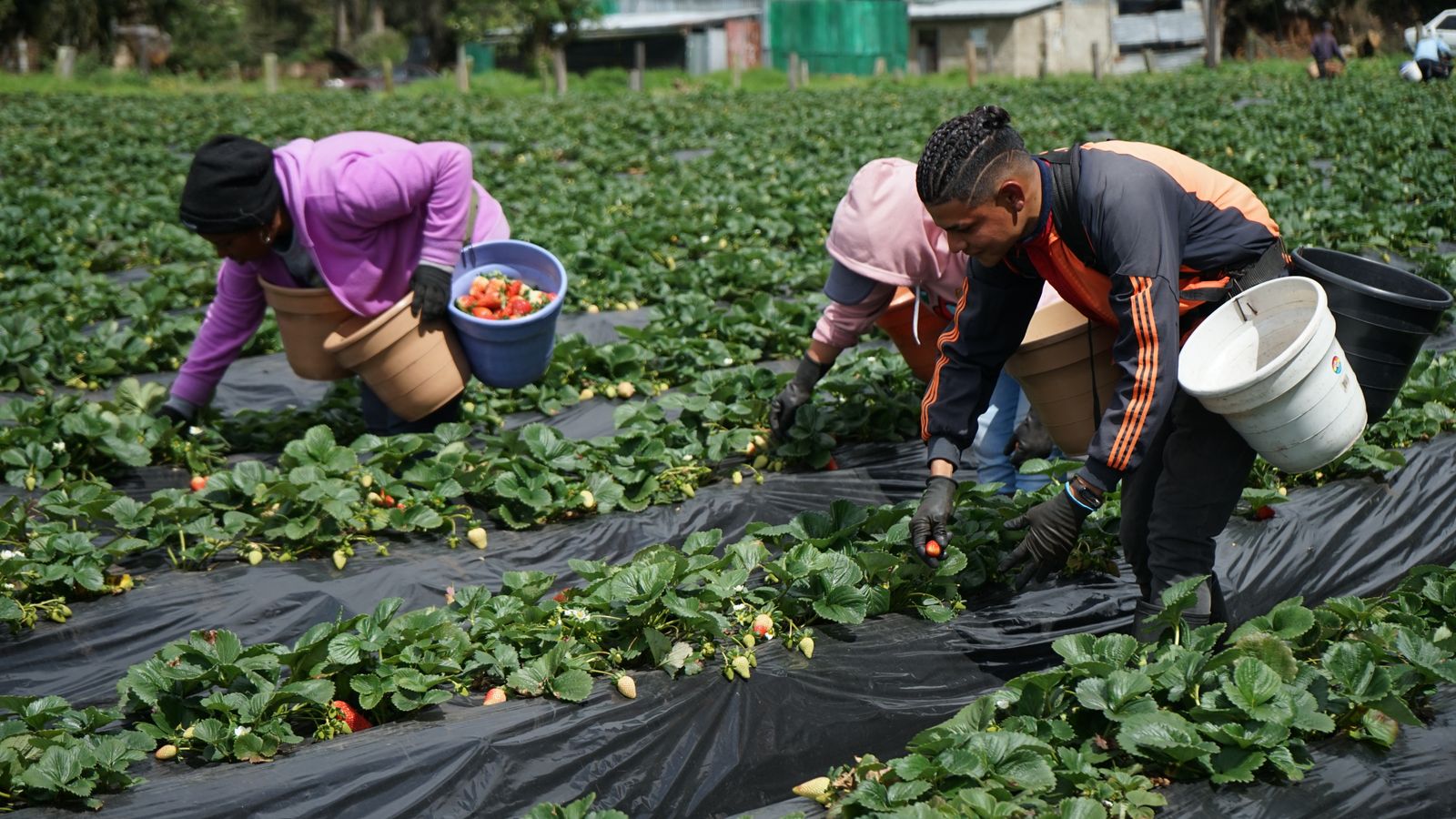
Every winter, the province of Huelva in southwestern Spain runs short of hands at exactly the moment its strawberry and berry fields need picking. The response is not improvised. Spain runs a state-managed programme that recruits workers in their home countries, flies or ferries them in on a proper contract, and expects them back home when the campaign ends. In 2025 that programme, known by the shorthand GECCO, brought 25,767 people from 17 countries to work in Spanish agriculture, a quarter more than the year before. Around 84 percent of them went to Huelva alone.
This is one of the few genuinely legal, genuinely repeatable ways for a non-EU worker with no degree and no savings to work in Spain on a real contract. It is also one of the most misrepresented, because the way in is narrow, it is free, and it cannot be bought. Almost everything a paid middleman will tell you about it is designed to obscure those three facts.
The programme that fills Huelva every winter
GECCO stands for gestión colectiva de contrataciones en origen, which means collective management of hiring at the point of origin. Every year the Spanish government issues an order setting out how it works for the next campaign, and the order for 2026 came out at the end of December 2025. Growers and their associations tell the authorities how many workers they need and for which tasks. Those requests are bundled together, sent to the countries Spain has labour agreements with, and the workers are selected there, before anyone travels.
The scale in Huelva is not small. More than 21,000 seasonal migrant workers were contracted for the 2026 campaign in that province, picking strawberries, raspberries, blueberries and blackberries across the winter and spring. The Moroccan intake alone was organised as a daily operation: from 18 January, roughly 400 people a day crossing from Tangier to Tarifa by ferry, Monday to Friday, for weeks. This is a logistics exercise the size of a small airline, run every year, because the work genuinely exists and cannot be covered locally.
Why this is a real door and not a rumour
What makes GECCO worth understanding is that it is not a grey area. The worker arrives with a signed contract before leaving home. The contract type is fijo-discontinuo, a recurring seasonal contract that can bring the same person back season after season. The wage and the hours are fixed by the provincial countryside collective agreement rather than by whatever the employer feels like paying, and housing is provided as a condition of taking part. The authorisation is tied to the season and permits up to nine months of work in a calendar year.
Be clear about what that means in cash terms. This is field labour paid at the legal minimum for field labour. It is not a way to get rich, and anyone describing it as one is selling something. What it is, is lawful, documented, contract-backed work in an EU country for someone who would otherwise have no lawful route into one at all, with the same job available again the following year if the first season goes cleanly.
The list of countries is the whole story
Whether this door is open to you at all comes down to one question: does your country have a labour migration agreement with Spain? If it does not, nothing else on this page applies to you, and no amount of demand for pickers changes that, because an agreement between two states is not something a shortage can conjure.
The countries that took part in 2025 numbered 17. In the Huelva campaign the shares were lopsided: Morocco held around 81 percent of contracts, Colombia about 13 percent, and Honduras roughly 4 percent, with Ecuador, Guatemala, Senegal, Mauritania and Gambia making up small remainders. Morocco is the anchor of the whole system, partly for proximity and partly because the recruitment machinery there, run through the national employment agency, has been doing this at volume for years.
India, Pakistan, Bangladesh and Nepal are not on that list. This is the same wall that turns up in almost every honest conversation about working in Spain from South Asia: the routes that exist for Moroccans and Latin Americans through bilateral agreements simply are not there. A reader from Lahore or Dhaka who has been told that Spain needs farm workers has been told something true and something useless at the same time. The shortage is real. The channel to fill it does not include them.
Before anyone spends money or time on this, the first thing to establish is whether your nationality is inside the programme at all, and if it is, which office in your own country actually runs the selection. Those are facts, not opinions, and we will give them to you straight. If your country has no agreement with Spain, we will tell you that plainly rather than let you pay someone who is about to pretend otherwise. If it does, we can explain how the repeater system works and what a multi-year seasonal authorisation does and does not lead to, so you go in knowing what you are building.
Nobody can sell you a place on it
Here is the part that matters most, because it is where people lose money. GECCO recruitment is collective and it is public. A Spanish grower association files for a block of jobs, often ten or more at once. The request goes to the partner country. The selection of individual workers is handled there, through the state employment service, sometimes with the grower association sending people to interview candidates directly in the towns they come from. At no point in that chain is there a private broker with a legitimate right to charge you for entry.
So when someone offers, for a fee, to put your name on the list, to guarantee a call-up, or to arrange a contract directly, they are describing something that does not exist within the system. The fee is the scam. The programme is free to the worker by design, precisely because its history includes enough exploitation that the state now runs the front end of it. If you remember one sentence from this article, make it that one: a request for payment to get you a seasonal contract in Spain is the signal to walk away.
The repeater rule decides your second year
The programme is deliberately built to favour people who have done it before and returned home on schedule. Of the workers contracted for the 2026 Huelva campaign, around 17,000 were returning workers rather than first-timers. A dedicated reserve quota, running to a couple of thousand places, is set aside specifically for repeat workers from Morocco. The system trusts people it has already seen come and go correctly.
That changes how you should think about the first season. Year one is the hard one to get, because you have no track record and you are competing against a large pool of proven returners for the smaller share of new places. Year one is also the one that decides everything after it. Work the campaign, keep your record clean, and above all leave on the date your contract ends, and you move into the category the programme is actually designed around. Overstay, even briefly, and you do not just risk your status now, you forfeit the call-up next year and every year after, which is worth far more than the extra few weeks.
What changed for 2026
The order that governs the 2026 campaign brought in a few things worth knowing. The headline one is a multi-year authorisation lasting up to four years, with the possibility of extension, which lets a worker come back for successive campaigns on a card that lets them enter and leave Spain between seasons rather than reapplying from zero each time. The nine-month annual work ceiling within the fijo-discontinuo contract stays. The order also formalised a way to process blocks of at least ten jobs together, which is how the grower associations move at the volumes Huelva needs.
Alongside the main programme sits a smaller scheme aimed at Moroccan women workers, built around training and savings so that the money earned in Spain turns into something durable back home. Its second edition ran through the 2025 and 2026 campaign with a few hundred participants taking entrepreneurship training in Huelva while they worked. In the first phase, of 600 women trained, 209 went on to start their own businesses in Morocco. It is a small piece of the whole, but it is the part that treats the work as a means to an end rather than an end in itself, which is the right way to treat it.
What it does not turn into
The circular design is the point, and it is also the limit. This is not a back route to living in Spain permanently. The authorisation is seasonal, the expectation of return is written into the whole structure, and seasonal time should not be assumed to count toward an ordinary residence permit or toward the continuous residence that longer-term status is built on. If your real aim is to settle in Spain, GECCO is not the quiet way to do it, and treating it as one is how people end up out of status.
It is also a separate thing from the other Spanish route people confuse it with. The catálogo de ocupaciones de difícil cobertura, the quarterly shortage-occupation list, is about year-round jobs where an employer can skip the labour market test, and it is dominated by maritime roles and a handful of trades. GECCO is about seasonal agricultural campaigns filled through bilateral agreements. Different legal basis, different contract, different purpose. An adviser who blurs the two either does not know the file or is hoping you will not notice.
Who should actually chase this
Strip out the noise and the fit is narrow but solid. This is for someone who holds the nationality of a country with a labour agreement with Spain, Morocco above all, then Colombia, Honduras, Ecuador and the others, who needs lawful work now, who is willing to do hard seasonal field labour at minimum-agreement wages, and who understands that the value compounds only if they return home on schedule and come back as a repeater. For that person, GECCO is one of the very few doors that is both real and legal, and it opens a little wider every year they use it correctly.
It is not for a South Asian reader hoping the shortage will bend the rules, because the bilateral agreement is not there and the shortage does not create one. It is not for anyone looking for a covert way to move to Spain for good, because the programme is designed to send you home and counts on you going. And it is not for anyone being asked to pay for access, because that person is not looking at the programme at all, they are looking at someone standing in front of it collecting money.
The fields will need picking again next winter, and the winter after that. More than 21,000 people will be brought in to do it in Huelva alone, most of them the same people as last year. Being one of them is less about ambition than about entering through the one channel that is actually open and never paying a cent to do it.
Frequently asked questions
Which countries can take part in Spain's GECCO seasonal hiring?
Only countries that hold a bilateral labour migration agreement with Spain. In 2025 the circular migration programmes brought people from 17 of them, and the campaign in Huelva was dominated by Morocco, which held about 81 percent of contracts, followed by Colombia at roughly 13 percent and Honduras at about 4 percent. Ecuador, Guatemala, Senegal, Mauritania and Gambia also take part in smaller numbers. India, Pakistan, Bangladesh and Nepal hold no such agreement, so this particular channel is closed to their nationals regardless of how many workers Spain is short.
Can I apply for a GECCO contract myself, or from inside Spain?
No. The hiring is collective and it happens in your country, not in Spain. A Spanish employer or grower association files for a block of jobs, usually at least ten at a time, and the actual selection of workers is run through your own country's public employment service, ANAPEC in Morocco and its equivalents elsewhere. The rules require that the workers are not already in Spain when the request is made. You cannot arrive on a tourist trip and convert it, and you cannot lodge an application on your own from Madrid or Huelva.
Should I pay an agent to get me a seasonal contract in Spain?
Being asked for a recruitment fee is the clearest sign that you are being scammed. Selection runs through a public employment channel in your own country and through registered grower associations on the Spanish side. Nobody in that chain is entitled to sell you a place, a name on a list, or a guaranteed call-up. Money changing hands for those things means someone is taking it who has nothing real to offer.
How long is a GECCO seasonal contract and how much does it pay?
The contract is fijo-discontinuo, a recurring seasonal contract, and it allows work for up to nine months in a calendar year. The daily wage and the working conditions are set by the provincial countryside collective agreement for the area, not negotiated worker by worker, and they track the national minimum wage rather than sitting above it. Housing is provided by the employer as a condition of the programme. This is field work paid at the legal floor for field work, not a high-wage route.
Does seasonal farm work in Spain lead to permanent residence?
The programme is built around going home between seasons, not around settling. The 2026 rules allow a multi-year authorisation lasting up to four years, which lets a worker return campaign after campaign without starting the paperwork from scratch, but that is circular migration by design. Do not assume seasonal time converts cleanly into an ordinary residence permit or counts the way continuous residence counts. If a longer-term stay in Spain is the real goal, that has to be planned separately and deliberately.
What is the single most important thing to get right in the first season?
Leaving Spain on the date your contract ends. Around 17,000 of the workers brought in for the 2026 Huelva campaign were returning workers, and a large part of the reserve quota is reserved for them too. The programme runs on people who came, worked, and went home when they were supposed to. Overstaying by even a short period is the fastest way to lose the far more valuable thing, which is the call-up next year and the year after.
- , Confirm first whether your country holds a labour migration agreement with Spain, because if it does not, this route is closed no matter what any recruiter claims.
- , Expect the selection to happen in your own country through the state employment service, never through a private agent charging a fee.
- , Treat a request for payment to secure a contract or a place on a list as proof of a scam and walk away.
- , Plan around the campaign calendar, since the strawberry and berry recruitment fills in autumn and winter for arrivals from January, and missing it means waiting a full year.
- , Leave Spain on the exact date your contract ends, because returning on time is what moves you into the repeater pool the programme is built to favour.
Important notice: this article is for general educational purposes only. Bilateral labour agreements, annual programme quotas, the countries that take part, contract terms and the conditions attached to seasonal authorisations all change from one campaign to the next and should be confirmed for the campaign you are applying to. Nothing here is a promise of a contract, a visa or a place in any programme. Wages and conditions are set by provincial collective agreements and vary. Speak to a Visagrad expert about your own nationality and circumstances before making plans or paying anyone for anything.
Keep exploring
One door always opens another.
Pull the next thread. Each one ends somewhere useful, a clearer shortlist, a real number, a plan you can keep, whether or not you ever work with us.
See where you fit on the map
Slide your grades and budget and watch Europe light up with your real matches.
Open thisTake the two minute assessment
A few honest questions and you walk away with a personal blueprint, free.
Open thisStudy in Germany
Free public tuition and the strongest job market in Europe.
Open thisStudy in Italy
Income based tuition and some of the most generous aid on the continent.
Open thisStudy in France
World names, tiny public fees, a generous safety net.
Open thisRead the hard truths
The traps agents paid by commission will never warn you about.
Open thisAsk us on WhatsApp
One honest message. No script, no pressure, a real person who has walked it.
Open thisWe do this for you, properly, every time.
Don't navigate this alone. Take the free 2-minute path finder and get a personalised read on exactly where you stand.
This guide reflects Visagrad's own view and information gathered at the time of writing. Rules, fees, deadlines and timelines can change quickly, and some details may already have moved. Nothing here is official, legal or immigration advice. For accurate, up-to-date guidance built around your own situation, speak with us first.