
Opportunity Spotlight, Spain
Spain is short 30,000 truck drivers, and the list that decides who can fill those seats belongs to the traffic authority
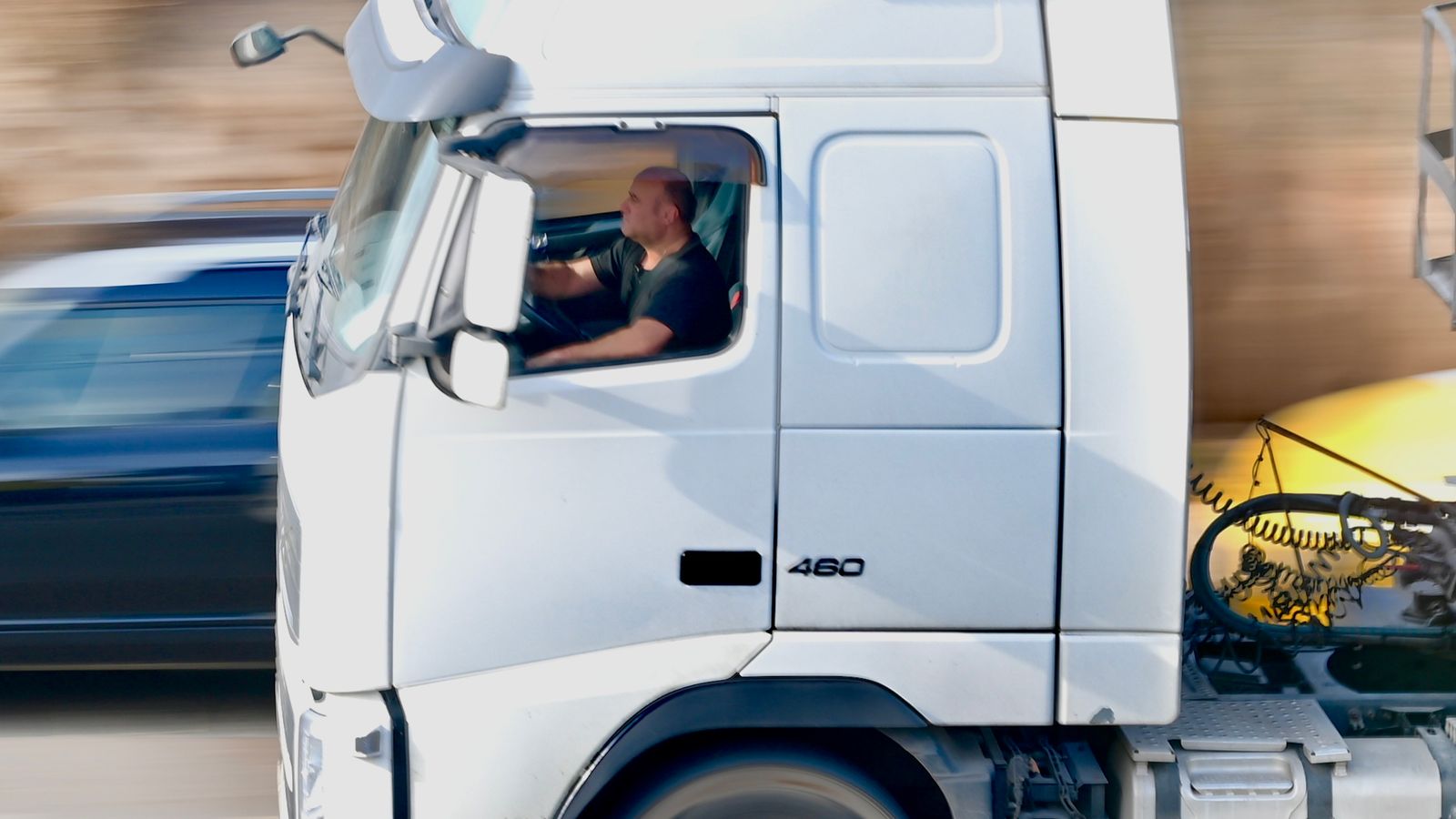
Spain cannot find enough truck drivers. The figure quoted all year is around 30,000 unfilled seats, plus another 4,700 on buses, and it has been repeated often enough to stop meaning very much, so here is what sits underneath it. The average professional driver in Spain is past 55. Roughly three in every hundred are under 25. The sector's own projection is that retirements widen the gap toward 116,000 before the decade closes, and the international road transport body expects Europe as a whole to pass a million unfilled driver posts this year. Employers are not being selective. They are running out of people.
So the work exists, it is permanent, and it pays on a collective agreement rather than on whatever an employer feels like offering. Whether you are allowed to take it is decided in a place almost nobody thinks to look, and it is not the immigration ministry. It is the traffic authority, and the document that governs your chances is a list of countries.
Thirty thousand empty seats
Road haulage moves about 85 percent of everything that gets moved in Spain, which is why a driver shortage stops being an industry problem and becomes an economic one fairly quickly. Companies have responded the way companies do when a queue of applicants fails to appear: they have gone looking further afield, and the state has quietly made that easier rather than harder.
The clearest evidence is in the exchange figures. In 2025 Spain completed 15,589 exchanges of foreign professional driving licences, up from 13,903 the year before. Peruvian nationals accounted for 4,317 of those, 2,585 of them category C truck permits and 1,733 category D bus permits. Morocco came next at 2,248, then Colombia at 1,206. Since May 2025 the whole procedure has run digitally, which took a process that used to involve queues and appointments and turned it into a file upload.
Those are not rumours about a policy that might arrive. They are completed cases from last year, in a country that is still 30,000 drivers short. The opportunity is real. The gate on it is narrower than the headlines suggest.
The list that actually decides this
Spain's traffic authority, the Dirección General de Tráfico, keeps a register of the non-EU countries whose driving licences it will convert into a Spanish licence without sending the holder back to the beginning. There are around 33 of them. What almost every article about the driver shortage leaves out is that the list has tiers, and the tier you fall into decides everything.
For most countries on it, the agreement covers ordinary cars and motorcycles and stops there. South Korea, Japan, Monaco, New Zealand, the United Kingdom and Switzerland sit in that group. A Japanese licence exchanges cleanly, and it exchanges into a category that cannot be driven for a living.
The tier that matters here covers the professional categories: C for rigid trucks, C+E for articulated combinations, D for buses and D+E for bus and trailer. Argentina, Bolivia, Brazil, Chile, Colombia, Costa Rica, Ecuador, El Salvador, Guatemala, Nicaragua, Panama, Paraguay, Peru, Uruguay, the Dominican Republic, Algeria, Tunisia, Turkey, the Philippines, North Macedonia and Andorra are in it. Morocco, Serbia, Ukraine, Moldova, Georgia and Honduras sit on partial terms, where some categories convert and others do not.
That last row is the part a commission-paid agent will not lead with. India and Pakistan hold no driving licence exchange agreement with Spain, in any category. Nothing about the driver shortage changes that, and no amount of demand for drivers creates an agreement between two states. An Indian or Pakistani licence holder who wants to drive professionally in Spain has to sit the Spanish theory and practical tests from the beginning, and can only do so as a legal resident. The shortage is genuine. It is simply not a shortage that your existing licence solves.
Where the agreement does cover your category, the terms are better than most people expect. Under the arrangement signed with Morocco in April 2024, holders of Moroccan C and D licences exchange on the practical test alone, with no theory exam, provided the other conditions are met. Peru, which supplied more than a quarter of all professional exchanges last year, works on similar lines. That is the difference between a few weeks of preparation and a year of starting over.
The condition that reverses the order
Here is the sentence that quietly decides most of these cases, and it is worth reading twice. To exchange a foreign licence in Spain you must already be a legal resident, holding a valid residence card, and the foreign licence must have been issued before you obtained that residence.
Read it again and the whole plan most people are carrying around falls apart. The exchange is not a visa. It does not bring you to Spain, it does not attach to a job offer from abroad, and it cannot be started from your own country. It is a step that becomes available to you after you are lawfully in Spain for some other reason. The sequence runs residence first, licence second, professional certificate third, driving job fourth, and any adviser who presents it in the opposite order either does not know the file or is hoping you do not.
That reordering is the single most useful thing on this page. It means the question to work on is not how to convert your truck licence. It is how you get lawful residence in Spain at all, because once that is solved, a category C licence from Lima or Casablanca or Manila becomes an asset that a Spanish employer is genuinely short of. Held the other way round, it is a document that does nothing for you.
If you hold a professional licence from a country on that register, the useful conversation is not about the licence. It is about which residence route is actually open to you, because that is the step the whole thing hangs on, and it differs completely depending on your nationality, your family situation, how long you have already spent in Spain and whether an employer is willing to put a contract in writing. Send us your nationality, your licence categories and where you are right now. We will tell you which of the routes described here you can realistically stand in, in what order, and how long it takes. If the honest answer is that your licence gives you nothing until a residence problem is solved first, we will say that plainly rather than sell you a course.
The CAP is a Spanish document and nothing substitutes for it
Even with the licence exchanged, you cannot yet drive for a living. Spain requires the Certificado de Aptitud Profesional, the professional competence certificate that every commercial driver in the country holds, and it is a separate qualification from the licence itself. Twenty years behind the wheel of a truck in Peru does not produce one. It can only be obtained in Spain, at a centre approved for the purpose.
The accelerated initial qualification course runs 140 hours. The ordinary version runs 280. Until now all of it had to be done in a classroom, which meant being physically present in a Spanish city for weeks, an obstacle in itself for someone who has just arrived and needs to earn.
That changes on 18 September 2026. Real Decreto 487/2026 allows up to 66 percent of the initial CAP training to be delivered through a live virtual classroom, meaning 92 of the 140 hours on the accelerated course and 166 of the 280 on the ordinary one. The connection has to be in real time with the instructor present, so it is a supervised class and not a recorded module you click through. Practical sessions and the exams stay in person, as they should. The rule also drops the requirement for fingerprint attendance systems, letting centres use signature sheets or digital registers instead.
For someone weighing this route, the September change is worth more than it sounds. It cuts the amount of time you must physically spend at a training centre by about two thirds, which is the difference between taking the qualification while working and taking it instead of working.
The door for people already inside Spain
There is a route that exists specifically for people who are in Spain without papers, and it runs directly through this profession. Under the immigration regulation approved by Royal Decree 1155/2024, in force since 20 May 2025, arraigo socioformativo grants temporary residence to someone who can prove two continuous years of presence in Spain and who enrols in approved training. The Ministry removed the 200-hour minimum that the earlier version of the rule imposed, and that removal was aimed squarely at this sector, because it is exactly what brought the 140-hour CAP course inside the qualifying range.
The authorisation is granted for one year. From there it can be renewed once for a further year, or converted into an ordinary residence and work authorisation for four years, and it permits employed work of up to 30 hours a week while the training is under way. For a person who has been in Spain for two years with no way to regularise, training as a professional driver is one of the few doors that leads somewhere the labour market is actively short.
Be clear about what this route is not. It is not available from outside Spain, it cannot be triggered by arriving on a tourist visa and waiting, and the two-year presence requirement is documented and checked. Anyone presenting it to you as a way to get from Lahore or Lagos to a Spanish truck cab is describing something that does not exist. It is a second chance for people already here, and on those terms it is one of the better ones in the regulation.
Why the shortage list is no help here
Spain publishes a quarterly list of jobs it cannot fill from the resident labour force, the catálogo de ocupaciones de difícil cobertura. An employer hiring from abroad for a role on that list skips the labour market test entirely, which is the slowest and least predictable part of any work authorisation. We have written elsewhere about the electrician entry that sits on that list in every province.
Truck driver is not on it. The third-quarter 2026 catalogue was published in August, unusually late, after the second-quarter edition was skipped altogether, and it carries the same entries as the first quarter with nothing added and nothing removed. Those entries are mostly maritime: ship engineers, naval mechanics, merchant marine officers, refrigeration technicians, catering staff on passenger vessels. Alongside them sit aluminium and metal carpenters, electrical installers, and mobile crane operators in a few provinces.
The result is an odd piece of Spanish administration worth understanding before you plan around it. The occupation with one of the largest documented shortfalls in the country receives none of the procedural help that the list provides, so an employer wanting to bring in a driver from abroad still has to advertise the post and prove nobody suitable in Spain wanted it. That is a real cost in time and paperwork, and it is a large part of why Spanish hauliers have concentrated on recruiting drivers who are already in the country rather than sponsoring them from outside.
Which brings the argument back to the same place. The bottleneck is the residence, not the driving.
What the money looks like
Pay is set by provincial collective agreements rather than a single national one, so the same job is worth noticeably different amounts in different parts of Spain. Madrid, Barcelona, the Basque Country, Navarre and Catalonia carry the stronger agreements. Base pay is usually somewhere between 1,000 and 1,400 euros a month, spread across 14 or 15 payments a year, and the kilometre supplement carries most of what turns that base into a real wage.
There was public money to help with the licence, and it is worth knowing about mainly so that you recognise it when the next round appears. Under the Plan Reconduce the government approved direct grants of up to 3,000 euros per person toward category C and D licences, with a total budget of 500,000 euros, covering driving-school fees, examination fees, the medical assessment and issuance of the permit. Priority went first to holders of the vocational qualification in road transport driving, then to second-year students on that programme, then to CAP holders, and awards were made in order of application.
That window ran from 14 November 2025 to 13 January 2026 and it is closed. If somebody is telling you today that the Spanish state will pay 3,000 euros toward your truck licence, they are describing a call that is not currently open. The scheme exists, the shortage that motivated it has not improved, and another round is plausible. None of that helps anyone in August 2026.
Who should actually chase this
Strip out the noise and this opportunity has a shape, and it fits some people extremely well and others not at all.
It fits a Peruvian, Colombian, Ecuadorian, Argentine, Moroccan, Turkish or Filipino driver who already holds a category C or D licence at home and who has a workable path to Spanish residence, whether through family, an existing permit, an Ibero-American nationality advantage or a job offer somebody is prepared to formalise. For that person the sequence is short, the demand is documented, and the pay is set by agreement rather than negotiated from a position of weakness. That is a rare combination.
It fits someone who has been in Spain for two years without papers and has been told there is nothing available to them, because arraigo socioformativo plus a 140-hour CAP is a genuine route into a regulated profession with a labour shortage behind it, and from September the training stops demanding that they sit in a classroom full time.
It does not fit an Indian or Pakistani licence holder who has read that Spain needs drivers and assumed the licence in their pocket is the ticket. There is no exchange agreement, the Spanish licence has to be taken from zero, and that can only be done as a resident. The honest advice for that reader is to stop working on the driving and start working on the residence, through study, through a sponsored role in an occupation that is on the shortage list, or through whatever family route applies. Solve that, and the driving becomes a question of a few months and a training centre.
The seats are empty and they are being filled right now, at a rate of more than 15,000 licence conversions a year, mostly by people from three countries who happened to be standing in the right procedural place. Being one of them is less about ambition than about knowing which document has to come first.
Frequently asked questions
Can I exchange my truck licence for a Spanish one?
Only if your country has an exchange agreement with Spain that covers professional categories, and only once you are already a legal resident in Spain. Spain holds agreements with around 33 non-EU countries, but most of them cover cars and motorcycles alone. Categories C, C+E, D and D+E are covered for a smaller group that includes Argentina, Bolivia, Brazil, Chile, Colombia, Costa Rica, Ecuador, El Salvador, Guatemala, Nicaragua, Panama, Paraguay, Peru, Uruguay, the Dominican Republic, Algeria, Tunisia, Turkey, the Philippines, North Macedonia and Andorra, with Morocco, Serbia, Ukraine, Moldova, Georgia and Honduras on partial terms. India and Pakistan appear on neither version of the list.
Can I apply for the licence exchange from my home country?
No. The exchange requires a valid Spanish residence card and proof that the foreign licence was issued before you obtained residence in Spain. That single condition is what most people get wrong. The exchange is not an entry route and cannot be started from abroad. You need a lawful residence in Spain first, obtained through some other channel, and the exchange becomes available after that.
How many foreign truck and bus licences did Spain exchange last year?
15,589 professional licence exchanges were completed in 2025, up from 13,903 the year before, a rise of about 12 percent. Peruvian nationals accounted for 4,317 of them, made up of 2,585 category C truck permits and 1,733 category D bus permits. Morocco followed with 2,248 and Colombia with 1,206. The procedure has been fully digital since May 2025.
Do I still need the CAP if my licence is exchanged?
Yes. The Certificado de Aptitud Profesional is a separate qualification from the driving licence, it is required to drive professionally in Spain, and it can only be obtained in Spain. The accelerated initial course runs 140 hours and the ordinary one 280. From 18 September 2026, Real Decreto 487/2026 allows up to 66 percent of that training to be delivered in a live virtual classroom, which is 92 of the 140 hours and 166 of the 280. Practical sessions and the exams themselves stay in person.
Is truck driver on Spain's shortage occupation list?
No. The catálogo de ocupaciones de difícil cobertura for the third quarter of 2026, published in August after the second-quarter edition was skipped entirely, carries the same entries as the first quarter: mostly maritime roles, plus aluminium and metal carpenters, electrical installers and mobile crane operators in certain provinces. Truck driver is absent, so an employer recruiting a driver from abroad still has to prove no suitable candidate was available in Spain. The shortage is larger than for several occupations that are on the list.
What does a truck driver earn in Spain?
Gross annual pay runs roughly 24,000 to 28,000 euros on domestic haulage and 30,000 to 38,000 on international routes, with the better international jobs reaching 45,000 once per diems are counted. Base pay set by collective agreement is usually 1,000 to 1,400 euros a month across 14 or 15 payments, and the kilometre supplement carries most of the rest. Agreements are provincial rather than national, so the same job pays differently in Madrid, Barcelona, the Basque Country, Navarre and Catalonia than it does elsewhere.
Are there grants to pay for the C or D licence in Spain?
There were, and that window has closed. Under the Plan Reconduce the government approved direct grants of up to 3,000 euros per person toward category C and D licences, with a total budget of 500,000 euros, covering driving-school fees, exam fees, the medical assessment and issuance. Applications ran from 14 November 2025 to 13 January 2026 on a first-come basis, with priority to holders of the road transport driving qualification, then second-year students on that programme, then CAP holders. Anyone counting on that money today is counting on a call that is not currently open.
- , Check which categories your country's exchange agreement with Spain actually covers before anything else, since the answer for cars and the answer for trucks are frequently different.
- , Confirm that your licence was issued before you obtained Spanish residence, because a licence obtained afterwards cannot be exchanged.
- , Budget for the CAP separately from the licence, as a Spanish course of 140 or 280 hours that no foreign experience replaces.
- , If you have two continuous years of documented presence in Spain, check arraigo socioformativo against the CAP course before assuming no route exists.
- , Do not build a plan on the shortage-occupation list, because driver is not on it and the labour market test still applies.
Important notice: this article is for general educational purposes only. Driving licence exchange agreements are bilateral and their scope changes; the categories covered for any given country should be confirmed for the day you apply. Professional qualification requirements, residence procedures and the terms of any public grant scheme are all subject to change, and pay figures are market and collective-agreement ranges that vary by province and employer. Nothing here is a promise of a work authorisation, a residence permit or a job. Speak to a Visagrad expert about your own nationality and situation before making plans or paying for training.
Keep exploring
One door always opens another.
Pull the next thread. Each one ends somewhere useful, a clearer shortlist, a real number, a plan you can keep, whether or not you ever work with us.
See where you fit on the map
Slide your grades and budget and watch Europe light up with your real matches.
Open thisTake the two minute assessment
A few honest questions and you walk away with a personal blueprint, free.
Open thisStudy in Germany
Free public tuition and the strongest job market in Europe.
Open thisStudy in Italy
Income based tuition and some of the most generous aid on the continent.
Open thisStudy in France
World names, tiny public fees, a generous safety net.
Open thisRead the hard truths
The traps agents paid by commission will never warn you about.
Open thisAsk us on WhatsApp
One honest message. No script, no pressure, a real person who has walked it.
Open thisWe do this for you, properly, every time.
Don't navigate this alone. Take the free 2-minute path finder and get a personalised read on exactly where you stand.
This guide reflects Visagrad's own view and information gathered at the time of writing. Rules, fees, deadlines and timelines can change quickly, and some details may already have moved. Nothing here is official, legal or immigration advice. For accurate, up-to-date guidance built around your own situation, speak with us first.